







Top 4 Benefits of Composite Materials for Lightweight Engineering
Written by: Prasad Bhonsule
Published: Aug 19, 2022
| View All Blogs
Finding ways to produce products cost-effectively is challenging enough, composite materials could be a good choice for lightweight engineering. But now, Automotive and Aerospace manufacturers are under increasing pressure to comply with strict environmental regulations to reduce carbon emissions – which is compounded by the need to continually lower costs without sacrificing strength or quality.
One method these companies have employed to combat high costs and high carbon emissions is their use of composite materials in the development of parts and components. Due to their lightweight structure, composites can increase fuel efficiency and hence reduce a vehicle’s carbon footprint.
But there are additional advantages that using composite materials in design and manufacturing delivers to support cost reduction and boost the integrity of the structure of your parts.
1) Strength-to-weight ratio
Compared to alternative metals such as steel and aluminium, composites are extremely strong and can be engineered to be strong in a specific direction. For example, the high strength of carbon fibres is important for structural components of a vehicle/aircraft such as floor beams, wings and stabilisers.
The combination of their high strength and light weight means that composites also have one of the highest strength-to-weight ratios of all materials.
This is particularly important when we consider the fact that composites materials can be engineered to be strong in a particular direction. For example, when a composite part needs to be stronger in a specific direction, materials are required to be thicker which naturally adds weight.
But the advantage with composites is that their light weight means that they can be strong in a specific direction, without being heavy.
2) Durability
composites materials can resist damage from moisture and corrosion from chemicals such as acid rain that would otherwise damage alternative metals. For example, a resin binder system can be used to increase the resistance of the composite part from corrosion.
The advantage here is that this reduces the need for maintenance and repair of parts due to moisture damage etc. which in turn helps to reduce costs.
3) Ability to create complex designs
composites materials can be moulded into a variety of complex shapes, without the need to use high-pressure tools. This is also why composite parts can be made to be stronger in a particular direction and resist bending. And because complex geometries can be achieved, single-part composites can then replace the assembly of a series of unit parts that are developed from alternative materials such as steel, consolidating the assembly process.
4) Thermal conductivity
Composite materials are also poor conductors of heat and electricity, making them very good insulators for parts where insulation is necessary.
However, if thermally conductive parts need to be produced, thermally conductive materials can be developed into the composite part, meaning this property is not lost in the development of composite parts.
So how can you achieve these benefits of composite materials?
The CATIA Composites Design 3 (CPD) is a software solution that helps to produce high-quality composites materials parts. This solution covers the preliminary, engineering and manufacturing detailed design phases, delivering a powerful composites design solution within a 3D environment.
A great time and cost-saving benefit of CPD is that CPD uses CATIA knowledge ware capabilities during the initial design phase, enabling automatic updates of parts during the engineering design phase. So, if any design changes do occur, you don’t have to begin the design process all over again, saving you time and money.
Summary:
The top four advantages of composite materials that can help to reduce costs and boost product integrity in the design and manufacturing of parts.
- Strength to weight ratio – composites can be extremely strong without being heavy, boosting the structural integrity of parts and overall fuel efficiency
- Durability – composites can withstand damage from various chemicals such as acid rain, reducing the need for repair and maintenance of parts
- Complex design capabilities – composites can be moulded into different complex shapes, which can then replace multi-unit assemblies, consolidating the assembly process
- Thermal conductivity – composites are poor conductors of heat, so can be used for parts where thermal insulation is required.
Categorised as: 3DEXPERIENCE | Manufacturing | What's New
Interested in 3DEXPERIENCE?
Investing in the 3DEXPERIENCE platform is a great way to reduce hardware costs.

Related Posts

3DExperience – Overview and Gaining Access
3DEXPERIENCE allows you to bring together colleagues and invited suppliers into a single web based platform allowing ideas to be shared and decisions to be made. The platform is CAD intelligent so will allow storage and viewing of your 3D models, even to non-SOLIDWORKS users if they need to review designs. In this series of blog posts we break down the general structure of the platform as well as a more in depth look into the main applications you can use. Each blog post will contain a commentated video summarising all that has been discussed in text form.

3D Experience – Dashboard Creation
Without Dashboards your 3DEXPERIENCE platform will be pretty empty so we need to understand what can be done with them on a per user basis and also how they can be shared to the rest of the team. In simple terms the dashboard is the layout of the webpage, the more complicated description you find on the 3DEXPERIENCE “Getting Started” screen is that “a dashboard is a holistic view on any topic or activity, gathering content from various sources. It is made of tabs, each tab containing widgets”.

3D Experience – 3DDrive
3DDrive is the storage application that sits on the 3DEXPERIENCE platform. As a basic comparison it is similar to Dropbox, OneDrive and Google Drive, and in fact these three programs can also be intergrated into 3DEXPERIENCE. Each user you invite to join your platform will consume a license and be given 5GB of storage space within 3DDrive.
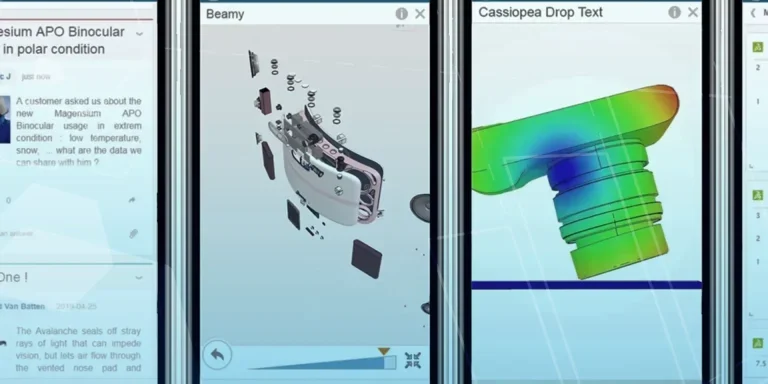
What is 3DSWYM? A 3DEXPERIENCE Platform Tutorial
3DSwym is the application at the heart of the 3DEXPERIENCE, allowing users to connect and collaborate across the platform.

How to come up with ideas for your design or engineering project – some helpful tips
We know coming up with an interesting and creative design or engineering project can be…
Managing Disk Space with SOLIDWORKS PDM Part #3: Web2.0 Temporary Session Files
In this blog series we are examining the factors influencing disk usage within PDM and what you can do to manage them. In the first part we discussed how you can re-organise your archive across multiple drives to get you back up and running quickly should you find you are short on space. In the second part we looked at the differences between a deleted and a destroyed file and the impact the PDM recycle bin has on Disk usage. In this third part we are looking at storage for Web2 temporary files, so this is especially important to customers who have deployed the Web2.0 interface for PDM Professional and have lots of users viewing / interacting with managed data.
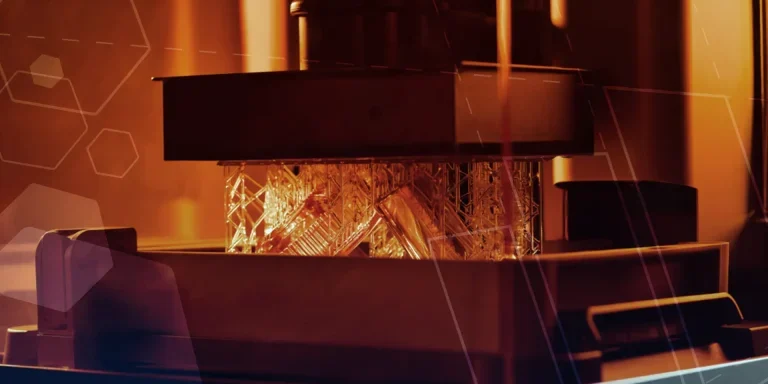
Design considerations when 3D printing
3D printing is a colloquial term used to generalise a family of additive manufacturing processes. At the consumer level the most common 3D printing process is Fused Deposition Modelling (FDM) – a technique whereby thermoplastics are extruded through a nozzle, and a part is built up layer by layer. FDM is very popular with hobbyists due to the relatively low cost of the printer, alongside the wide range of properties and appearances thermoplastics present. The conveniency to turn a custom CAD model into a product in a short space of time is a superb way to make life easier.
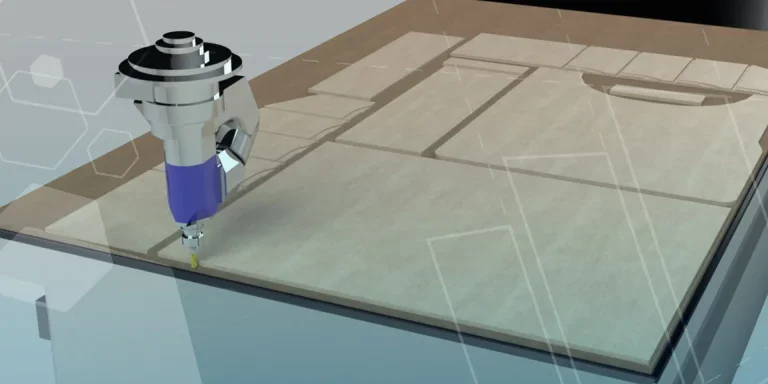
Why should I be nesting parts?
Firstly we should define what is nesting? Nesting is like putting the pieces of a jigsaw together, it is the process of creating an optimal layout of your flat parts so that you get the most out of your material. Typically this process would be used in the sheet metal, fabric, plastic and wood/joinery markets. Nesting can also be used to align parts with a specific grain such as brushed metal products, patterned materials or wood grain.

Case Study: Morgan Motors Accelerate Their Business with 3DEXPERIENCE
Discover how our Business Transformation team has been supporting Morgan Motor Company as they continue to strive forward and invest in opportunities to protect and improve their profitability, growth, product line and customer experience.
Why Move from CATIA V5 to CATIA 3DEXPERIENCE?
Design on the go, work with team members around the world, engineer across systems and domains, and effortlessly keep all your data up to date when you switch to 3DEXPERIENCE CATIA