







SolidCam HSR and HSM
A simple workflow from rough stock to finished surface
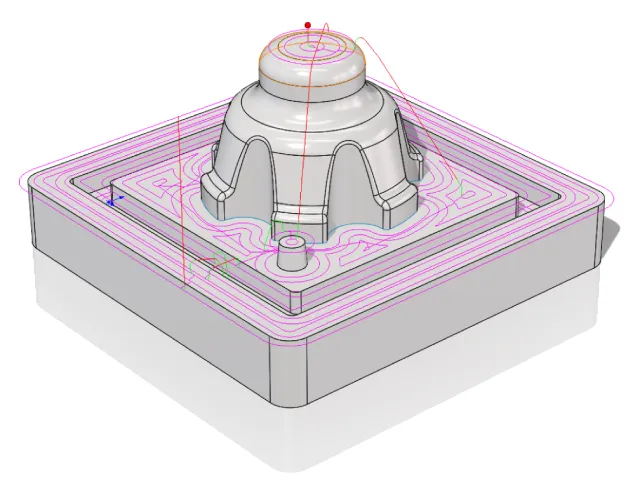
SolidCAM HSR establishes the main 3D form and removes rest material; SolidCAM HSM then semi-finishes and finishes the component using strategies selected for the angle, shape and stock condition of each area.
SolidCAM Pro HSR and Pro HSM
SolidCAM also documents Pro 3D HSR and Pro 3D HSM as streamlined technologies for complex 3D and prismatic components, focused on faster calculation, simplified definition, advanced gouge checking and collision-aware roughing and finishing.
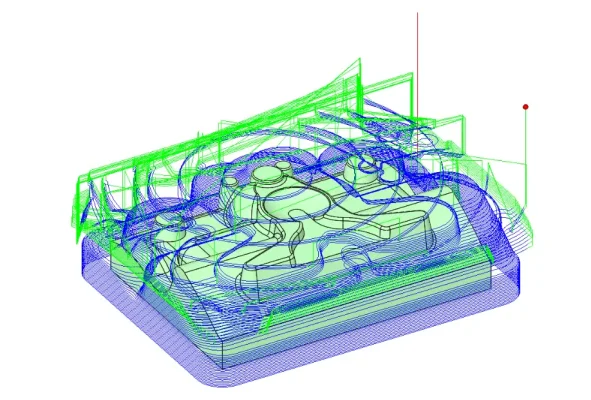

SolidCAM HSR Roughing Strategies
SolidCAM HSR is a traditional 3D roughing toolpath. With a large variety of toolpath styles it is a great additional feature set to Pro HSR’s capability allowing you to fully optimise your 3D machining workflow.

Keeps the tool on the part and follows previous cutting paths where possible, with cavity, core and hybrid spiral modes.


SolidCAM HSM
15 Semi-Finishing and Finishing Strategies
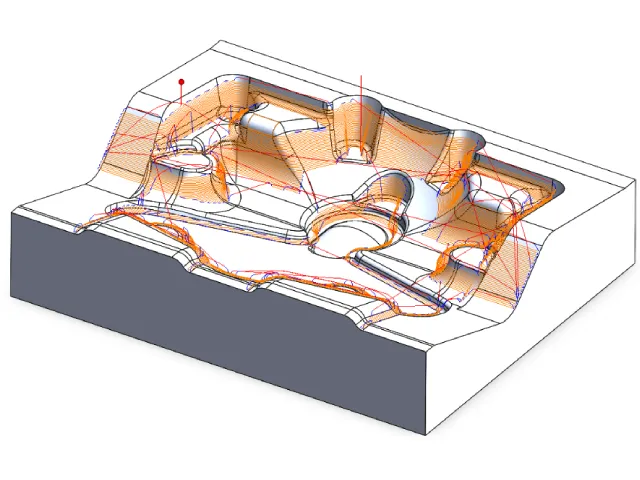
Constant Z
Steep and vertical regions
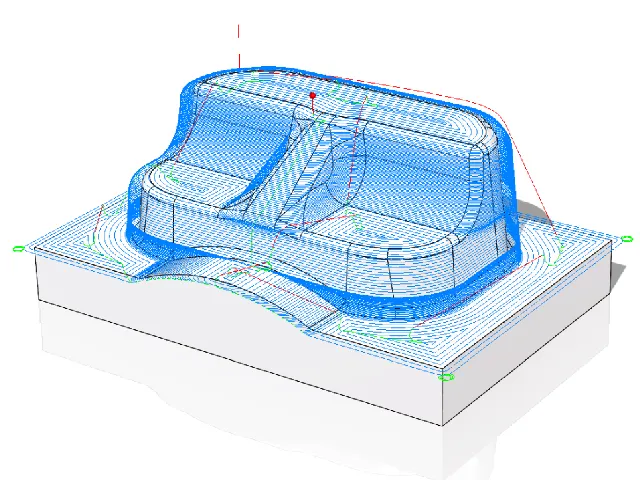
Hybrid Constant Z
Constant Z with added shallow-area passes.
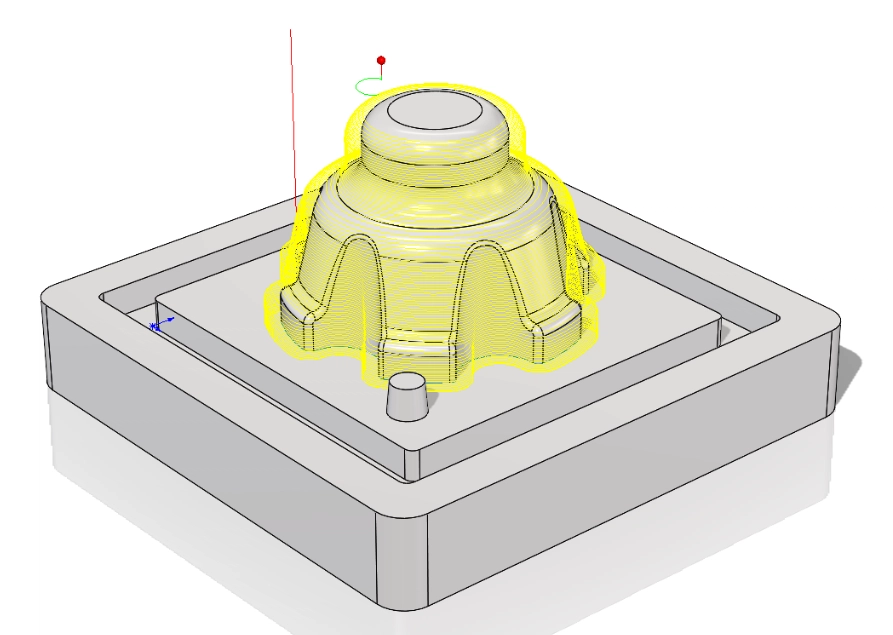
Helical
Closed Z-level sections joined as a descending ramp.
Horizontal
Recognises and machines flat faces.

Linear
Parallel passes at a defined angle and stepover.

Radial
Passes rotated around a central point.

Spiral
A planar spiral projected over the model.

Morphed
Passes progressively changing between drive curves.

Offset Cutting
Paths between one drive curve and a virtual offset.

Boundary Machining
A drive boundary projected onto model geometry.

Rest and Contour Rest
Machining of areas where material remains.

3D Constant Step Over
Controlled spacing over mixed 3D surfaces.

Pencil and Parallel Pencil
Internal-corner and fillet clean-up.

3D Corner Offset
Detailed corner regions

Prismatic Part
Suitable 3D prismatic geometry
Applications
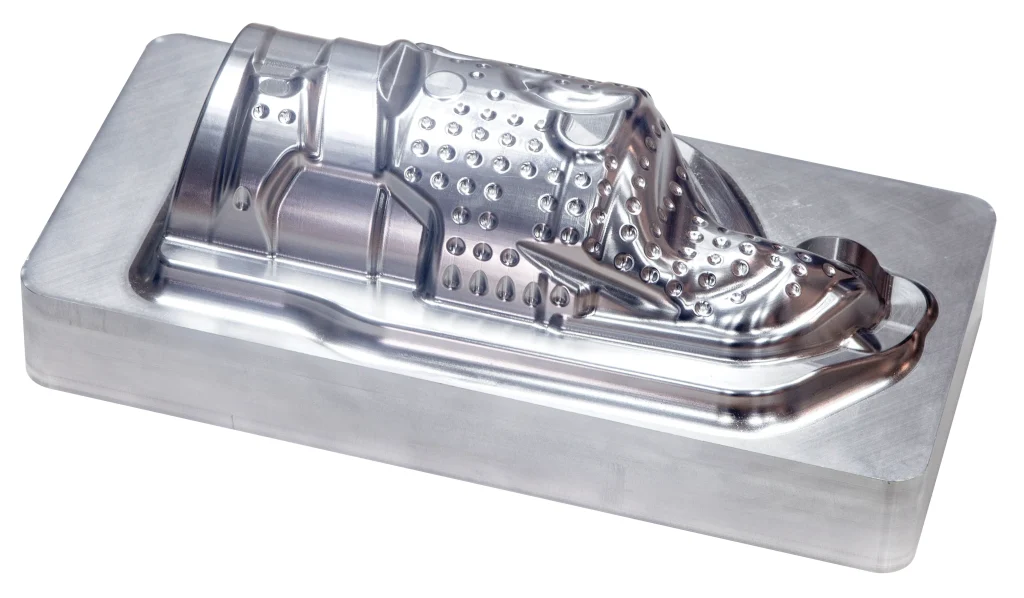
SolidCAM HSR and HSM are well suited to manufacturers producing mould cavities, cores and inserts, press tools, dies, aerospace-style freeform surfaces, electronic housings and complex prismatic 3D components.
These are parts where the machining process often needs to remove large volumes of material first, return with smaller tools to clear rest material from tighter regions, and then apply the appropriate semi-finishing and finishing strategy for steep walls, shallow faces, blends, fillets and internal corners. The workflow is particularly useful when surface quality, toolpath control, reduced air cutting and predictable stock management are important, helping programmers build a staged process from rough stock removal through to controlled finishing on detailed 3D geometry.
The versatility in the finished parts from the impressive Siemens 828D control to the Y axis and driven tooling, all without which we could not have produced this part. Going from simple turning to complex multi axis milling to create an amazing bat out of some tough material.
Will Kearse
Manufacturing Application Engineer
Frequently Asked Questions
SolidCAM HSR covers bulk and rest roughing; HSM provides semi-finishing and finishing strategies.
Moulds, tools, dies, complex 3D and prismatic parts, with published aerospace examples.
Constant Z is documented for steep areas, while Linear and Constant Step Over suit shallow or mixed-angle work.
Yes. Rest Roughing and several HSM rest and corner strategies target material left by previous tools.
With working areas, boundaries and Z-level limits.
SolidCAM states that it smooths motion, limits retract height and reduces non-machining moves.
Streamlined 3D roughing and finishing technologies with faster calculation, simpler definition and advanced checking.
Yes, Solid Solutions offers training for the full suite of SolidCAM Modules including HSR and HSM.