






SolidCAM Turning Training
Introduction to basic concepts of turning and interface of SolidCAM for efficient manufacturing.

Course Overview
Introduction to basic concepts of turning and interface of SolidCAM for efficient manufacturing. This training will cover the essential concepts and practical skills for CNC turning operations. Participants will learn the definitions and roles of stock, target models, and clamps, along with various operation types such as turning, grooving, drilling, and threading.
The course will introduce different geometry definitions, tool types, and how to manage tool tables effectively. Additionally, we’ll explore simulation methods to validate machining processes and guide you through generating accurate G-Code for production.
NOTE: This course is available as part of the SOLIDCAM Passports.
What You'll Learn
Course Agenda
Lesson 1: Definition of stock, target model and clamp
Lesson 2: Different Operation types (Turning, Grooving, Drilling, Threading)
Lesson 3: Various Geometry definitions
Lesson 4: Tool types and tool tables
Lesson 5: Simulation types
Lesson 6: Generation of G-Code
What do our customers say?
We use Feefo (the global feedback engine) to gather anonymous but certified genuine reviews from our customers. We continually use customer feedback to improve the service that we offer to our customers and to motivate our team.
Click the Feefo button below to read the latest reviews for this course.
Training Booking Process
How to book a course?
Training Methods

Self-Paced
Student, job-seeker, or working professional? Our SOLIDWORKS self-paced training essentials course gives you the flexibility to learn when and where you want.
In-Classroom / Virtual
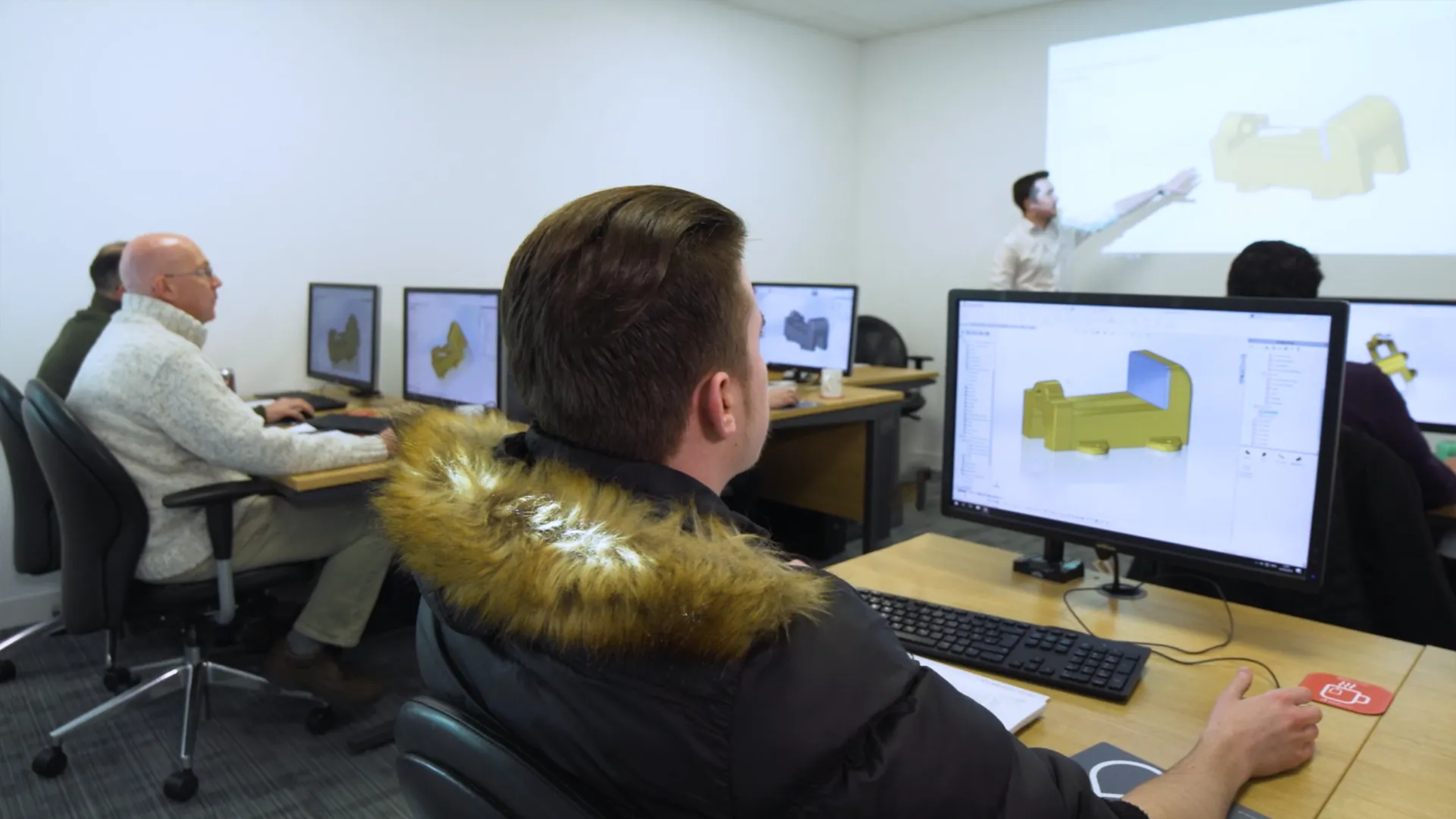
For those who prefer a traditional classroom environment courses can be taken in one of our training locations in the UK and Ireland.
Our virtual courses provide hands-on, live, interactive group training session from a professional, qualified instructor.
Onsite / Bespoke
We can arrange onsite training for any of our courses, contact us to discuss further.
Book your course
Click to view upcoming SolidCAM Turning Training courses, book your place on the course today to save your space. No upfront payment necessary.
Frequently Asked Questions
Accredited
- SOLIDWORKS certified training instructors
- All courses are CPD-accredited for professional development
- Attendees receive certificates for every course
Variety & Frequency
- Courses run every week of the year (1200+ per year)
- 70+ courses, we cover a broad range of topics and software
- Training passport bundles provide amazing value
Convenience
- 22 training venues located across the UK & Ireland
- State-of-the-art Virtual training is available
- We can arrange onsite and bespoke training courses
Quality
- 4.9 Star rating on Feefo for training courses
- Limited class sizes ensure personal attention
- Hands-on format with high-end PCs for every attendee
You can reserve your place on our SOLIDWORKS training courses for free via our course schedule.
Simply find the course you'd like to attend and click 'Book Now' and complete your registration.
If you have already purchased a course or passport then there is nothing else you need to do. If you haven't bought the course yet then your SOLIDWORKS account manager will be in touch to discuss your requirements and arrange payment.
Alternatively you can give us a call on 01926 333777 and book your course today!
Yes! All of our classroom and virtual courses are CPD-accredited, meaning you are guaranteed to progress in your professional development.
A SOLIDWORKS Passport offers you a comprehensive training and development plan in one single purchase.
These Passports allow you to make massive savings on training, compared to purchasing multiple courses one at a time.
Separate Passports are available for SOLIDWORKS CAD & SolidCAM, depending on your design & manufacturing needs.
Each SOLIDWORKS CAD Passport can be purchased in different lengths that are valid for 1, 2, 3 or 5 years. The passport is active from the date of the first course you attend.
We recommend new SOLIDWORKS users start off with SOLIDWORKS Essentials. From there the courses that you benefit you most will depend on your products and workflow.
For most professional SOLIDWORKS users the best courses to take next are: Advanced Part Modelling, Drawings, Advanced Assembly modeling.
We are always happy to discuss your requirements and provide advice on the best training and resources for you. Speak to your account manager, contact us online or get in touch via training@solidsolutions.co.uk.
Every license of SOLIDWORKS on subscription comes with complimentary exam vouchers so you can get certified. Learn more about the series of exams on our dedicated SOLIDWORKS Certifications page.
Book your next course to continue your journey to becoming a certified SOLIDWORKS expert.
We have a variety of classrooms across the UK and Ireland where you can learn SOLIDWORKS. Check out our SOLIDWORKS Training locations here and find a venue near you.
Our virtual classrooms can be accessed by anyone, anywhere. So in the unlikely event that there isn't a classroom nearby, or you'd prefer to attend remotely, You can still attend your chosen training course.
Get in touch with our team as soon as you are able to. Give us a call on 01926 333777 or email training@solidsolutions.co.uk and we can assist you.
Take a look at our Training Course Schedule, as you may be able to rearrange to attend an alternative date for your chosen course.
Our courses offer free cancellation providing the cancellation occurs outside of the fourteen days before the course start date.
Please refer to the Terms & Conditions for full information surrounding cancellations & fees.
Other Training Courses
SOLIDWORKS Electrical Schematics Training
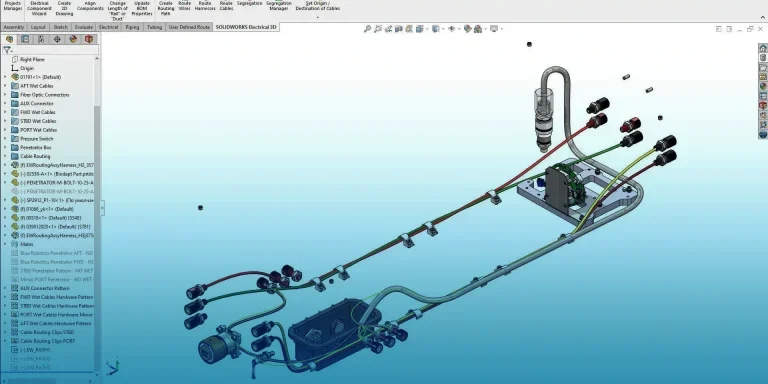
The goal of this SOLIDWORKS Electrical Schematics training course is to teach you how to use SOLIDWORKS Electrical to optimize your drawings and designs for manufacturability so you can maximize quality, avoid rework and decrease time to market. This course is focused on 2D Design.

SOLIDWORKS Design Essentials Training
The SOLIDWORKS Essentials training course is recommended to anyone new to SOLIDWORKS. Starting from the very basics of the program, Essentials is a comprehensive introductory course that develops skills for day-to-day modelling in SOLIDWORKS.

SOLIDWORKS Manage Training
The SOLIDWORKS Manage training is designed to develop the fundamental skills and concepts required to administrate SOLIDWORKS Manage effectively.

SOLIDWORKS Bespoke Training
Need something a little different? Our SOLIDWORKS bespoke training can build courses to suit the requirements of your teams and industry challenges.
SMAP3D P&ID Training
In the Smap3D P&ID Training course you will learn the software’s purpose, interface, and how to structure data using projects, symbols, and lines.
SolidCAM iMachining Training
Learn the basics of the SolidCAM iMachining module and program manufacturing processes.

DraftSight Training
A comprehensive introduction to 2D CAD focusing on the basics of model and sheet space, drawings, and geometry manipulation.
CAMWorks Mill-Turn Training
Learn how to setup and use features for a mill-turn setup and combine milling and turning within CAMWorks.
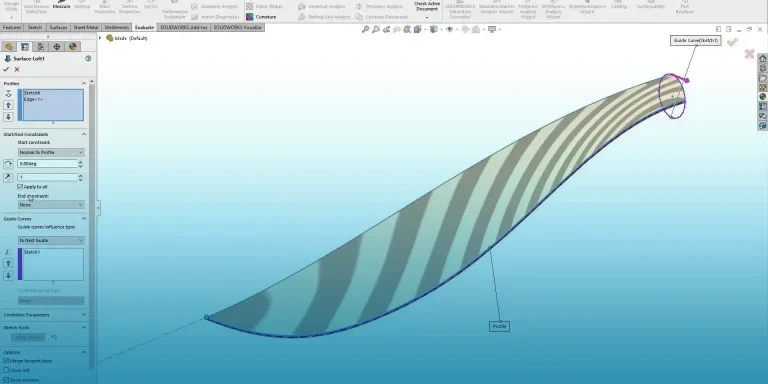
SOLIDWORKS Surface Modelling Training
The SOLIDWORKS Surface Modelling training course introduces the concept of modelling with surfaces, ideal for consumer and product designers who have a requirement to create complex shapes and forms.