







Smap3D Piping Training
In the Smap3D Piping Training course you will learn to create pipework from P&ID files, add equipment, and build routes with minimal effort.

Course Overview
With Smap3D Piping you can generate all the pipework for your systems. These can be driven from a Smap3D P&ID file, or manually generated. Simple 3D Sketches are created. Flanges, gaskets and elbows are added automatically. Additional equipment can then be added to that. The course will go through all the key tools to allow you to create your own routes. Add your own equipment to the system, and make the changes that are often required with the minimum of fuss.
Along with introducing the course, the training files will be extracted and the Plant Design Administrator tool will be used to set up the software to ensure a successful course.
What You'll Learn
Course Agenda
Lesson 1: Create 3D sketches
3DSketches are at the core of the pipelines. 3DSketches will be created and connected to various components to position the pipeline routes. We will use the 3DSketch Relations to tie the geometry to clips and tanks.
Lesson 2: Create paths
3DSketches will then be turned into pipeline paths. The Plant Design Administrator will be used to explain the settings and how assemblies are named.
Lesson 3: Create pipelines
The pipelines will be generated, learning how the flanges, gaskets and other components are placed. The connections to components will also be explained, using the Coordinate System Wizard to add connections and how to specify the type of connection.
Lesson 4: Structured work with pipelines in assemblies
The way in which the assembly can be structured will be explained along with the advantages and disadvantages of each.
Lesson 5: Settings to prepare in PlantDesign Administrator
The settings for storing pipe segments and assemblies will be explained.
Lesson 6: Create new subassembly for pipeline
The assembly will be created and the Pipe Specification Editor will be used to show where the settings are set and stored for weld gaps and flange options.
Lesson 7: Tee branches
Tees are used to branch off from the main line. The options and settings for these will be explained. Tees can be placed with reducers to cover the size changes required.
Lesson 8: Reduced tees and Auxiliary parts
Reducing Tees will be fitted to a pipeline and auxiliary parts will get added so that the standard end conditions can be overridden.
Lesson 9: Change pipeline size
Pipeline diameter will be changed, showing that all flanges and elbows are replaced as standard.
Lesson 10: Register parts in pipe specs
Parts will be added to the pipe specification to enable quick placement of these parts into the pipelines.
Lesson 11: Blind flange
Not all pipelines end at a component. When there is a possible open end, a blind flange will be added to close off the pipe.
Lesson 12: Register part in database
In order to add a part into the database it needs to have connection data added to the model. Once these are added they will then be registered into the database for future use.
Lesson 13: Change pipeline path
Pipelines often need to be amended to cope with changes in layout. A route path will be changed and the alterations followed through to the pipe sections and elbows.
Lesson 14: Work cost-efficiently - save welds
Pipeline sections will be kept to a minimum, by removing unnecessary sections.
Lesson 15: Finish and save in Smap3D Piping
The Finish and save command will be covered to show how to ensure the routes are saved correctly.
Lesson 16: Logging and messages
This is used to track actions within Smap3D Plant Design. The route will be altered so that an error is created. The log file is then examined to see the error has been recorded.
Lesson 17: Concentric reducers
These will be added to change the route diameter in different ways.
Lesson 18: Insulation
Insulation will be added to routes and the options for these will be covered.
Lesson 19: Cutoff
The Cutoff ensures that individual sections of pipe do not exceed the maximum pipe length. Additional components are then added to path segments that exceed this value.
Lesson 20: Elbows/bends and other variations
Mechanical assemblies can be connected to a Piping and Instrumentation Diagram (P&ID). This section will link up the P&ID to the assembly and show how a to-do list is used to ensure that all components from the P&ID are placed. The size and specification for these parts come from the P&ID.
Lesson 21: From 2D to 3D
As an alternative to flange and gasket connections, a pipeline will use couplings to connect elements within the pipeline.
Lesson 22: FileSystemProvider
Not all parts need to be in the parts database, when this is the case the FileSystemProvider needs to be enabled. This allows parts from other sources to be included in Piping Specifications.
Lesson 23: Prepare custom components with coordinate systems
The additional elements will be added to components to create a new library of valves.
Lesson 24: Register parts in database
The group of valves will now be added to the piping database.
Lesson 25: Create new pipe specification
Finally a new pipe specification will be generated, using the new valves and a pipeline created to test that all is functioning correctly.
What do our customers say?
We use Feefo (the global feedback engine) to gather anonymous but certified genuine reviews from our customers. We continually use customer feedback to improve the service that we offer to our customers and to motivate our team.
Click the Feefo button below to read the latest reviews for this course.
Training Booking Process
How to book a course?
Training Methods

Self-Paced
Student, job-seeker, or working professional? Our SOLIDWORKS self-paced training essentials course gives you the flexibility to learn when and where you want.
In-Classroom / Virtual
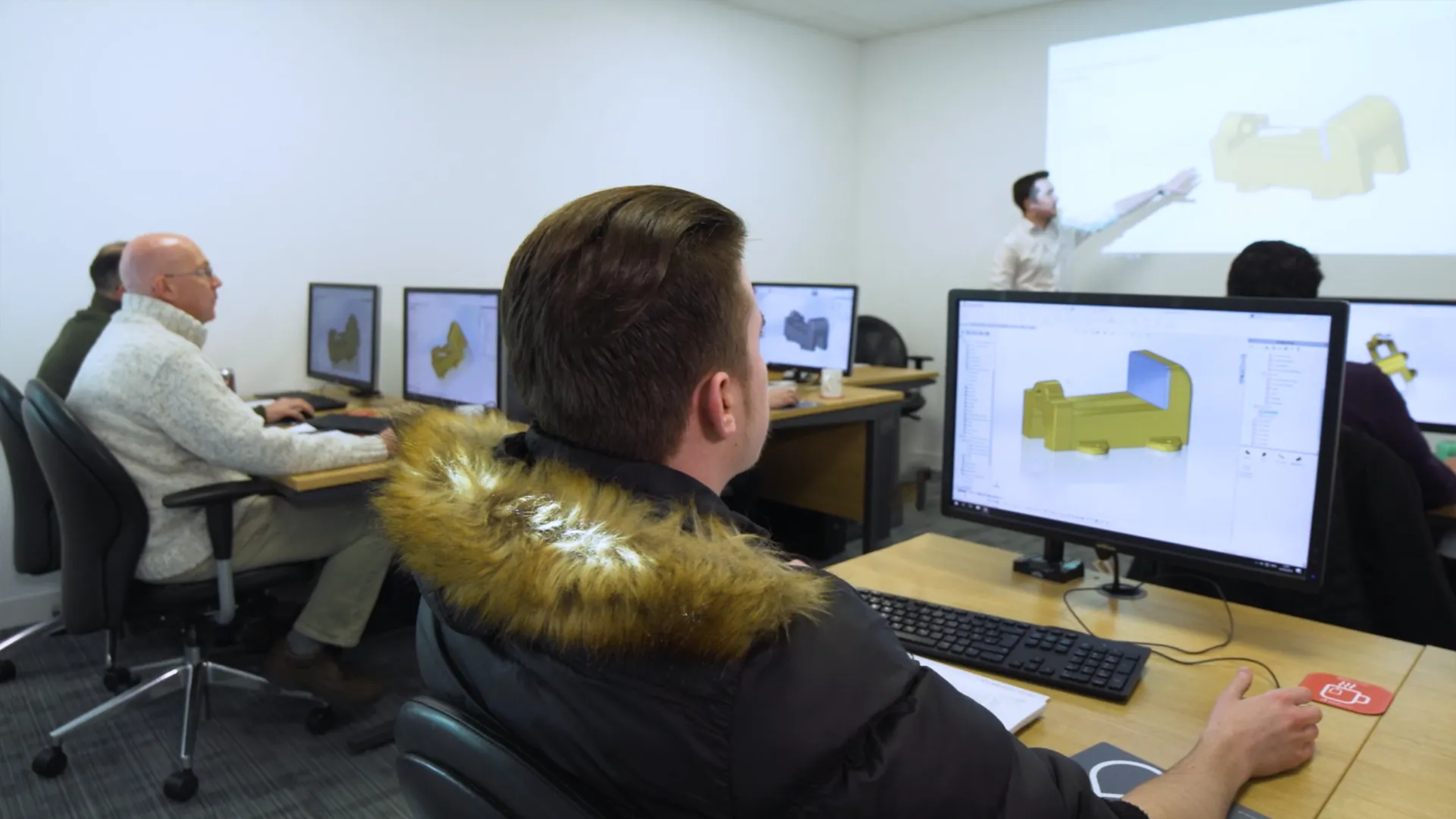
For those who prefer a traditional classroom environment courses can be taken in one of our training locations in the UK and Ireland.
Our virtual courses provide hands-on, live, interactive group training session from a professional, qualified instructor.
Onsite / Bespoke
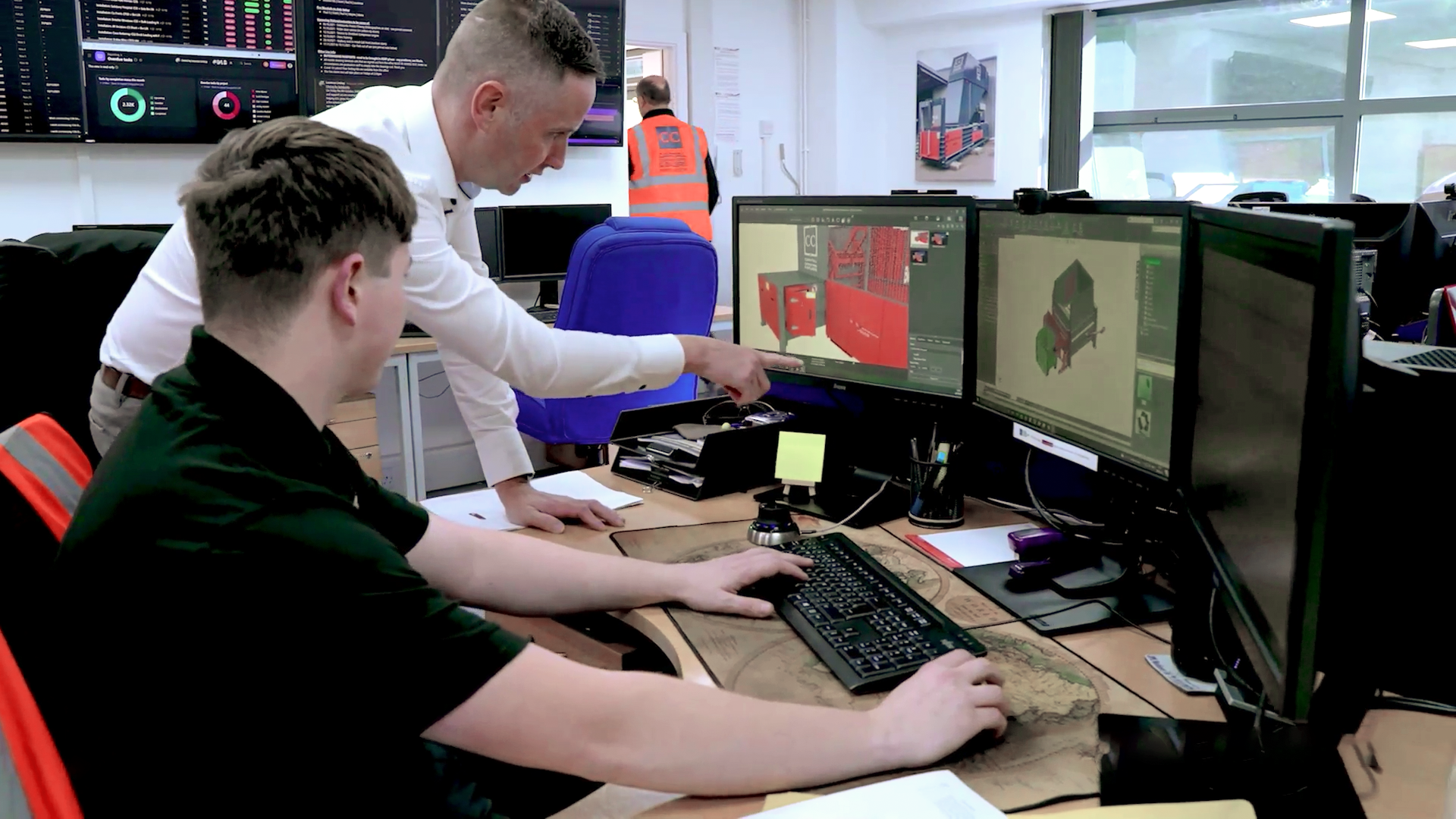
We can arrange onsite training for any of our courses, contact us to discuss further.
Book your course
Click to view upcoming Smap3D Piping Training courses, book your place on the course today to save your space. No upfront payment necessary.
Frequently Asked Questions
Accredited
- SOLIDWORKS certified training instructors
- All courses are CPD-accredited for professional development
- Attendees receive certificates for every course
Variety & Frequency
- Courses run every week of the year (1200+ per year)
- 70+ courses, we cover a broad range of topics and software
- Training passport bundles provide amazing value
Convenience
- 22 training venues located across the UK & Ireland
- State-of-the-art Virtual training is available
- We can arrange onsite and bespoke training courses
Quality
- 4.9 Star rating on Feefo for training courses
- Limited class sizes ensure personal attention
- Hands-on format with high-end PCs for every attendee
You can reserve your place on our SOLIDWORKS training courses for free via our course schedule.
Simply find the course you'd like to attend and click 'Book Now' and complete your registration.
If you have already purchased a course or passport then there is nothing else you need to do. If you haven't bought the course yet then your SOLIDWORKS account manager will be in touch to discuss your requirements and arrange payment.
Alternatively you can give us a call on 01926 333777 and book your course today!
Yes! All of our classroom and virtual courses are CPD-accredited, meaning you are guaranteed to progress in your professional development.
A SOLIDWORKS Passport offers you a comprehensive training and development plan in one single purchase.
These Passports allow you to make massive savings on training, compared to purchasing multiple courses one at a time.
Separate Passports are available for SOLIDWORKS CAD & SolidCAM, depending on your design & manufacturing needs.
Each SOLIDWORKS CAD Passport can be purchased in different lengths that are valid for 1, 2, 3 or 5 years. The passport is active from the date of the first course you attend.
We recommend new SOLIDWORKS users start off with SOLIDWORKS Essentials. From there the courses that you benefit you most will depend on your products and workflow.
For most professional SOLIDWORKS users the best courses to take next are: Advanced Part Modelling, Drawings, Advanced Assembly modeling.
We are always happy to discuss your requirements and provide advice on the best training and resources for you. Speak to your account manager, contact us online or get in touch via training@solidsolutions.co.uk.
Every license of SOLIDWORKS on subscription comes with complimentary exam vouchers so you can get certified. Learn more about the series of exams on our dedicated SOLIDWORKS Certifications page.
Book your next course to continue your journey to becoming a certified SOLIDWORKS expert.
We have a variety of classrooms across the UK and Ireland where you can learn SOLIDWORKS. Check out our SOLIDWORKS Training locations here and find a venue near you.
Our virtual classrooms can be accessed by anyone, anywhere. So in the unlikely event that there isn't a classroom nearby, or you'd prefer to attend remotely, You can still attend your chosen training course.
Get in touch with our team as soon as you are able to. Give us a call on 01926 333777 or email training@solidsolutions.co.uk and we can assist you.
Take a look at our Training Course Schedule, as you may be able to rearrange to attend an alternative date for your chosen course.
Our courses offer free cancellation providing the cancellation occurs outside of the fourteen days before the course start date.
Please refer to the Terms & Conditions for full information surrounding cancellations & fees.
Other Training Courses

SOLIDWORKS for Educators Part 2 Training
Advancing the confidence and skills of educators for more complex design challenges with the SOLIDWORKS for Educators Part 2 Training.
SOLIDWORKS Electrical Schematics Training
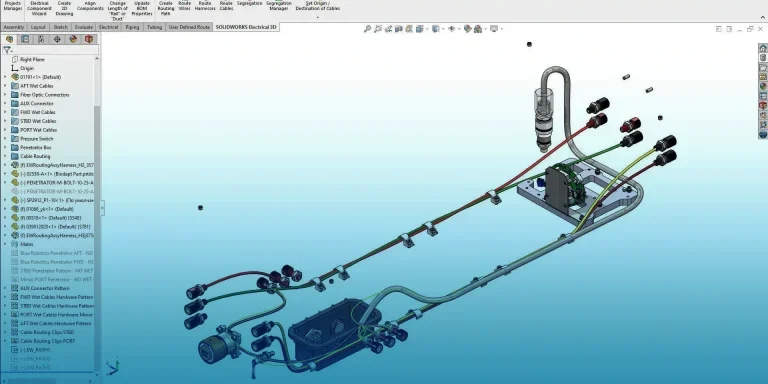
The goal of this SOLIDWORKS Electrical Schematics training course is to teach you how to use SOLIDWORKS Electrical to optimize your drawings and designs for manufacturability so you can maximize quality, avoid rework and decrease time to market. This course is focused on 2D Design.
SOLIDWORKS Assembly Modelling Training
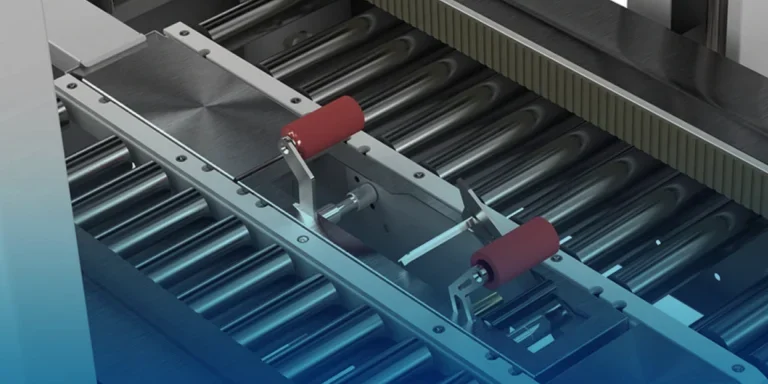
In the SOLIDWORKS Assembly Modelling training course learners master top-down assembly design in SOLIDWORKS for bespoke components. Learn shortcuts, automated configurations, and advanced assembly management for improved large assembly performance.
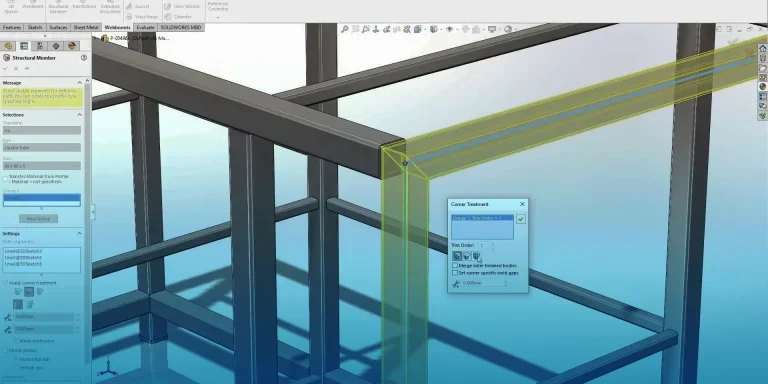
SOLIDWORKS Weldments Training
The SOLIDWORKS Weldments training course is designed to teach you all about creating fabricated structures within a single part environment. Using a vast library of standard profiles, weldments allow you to create complex structures from simple base sketches.
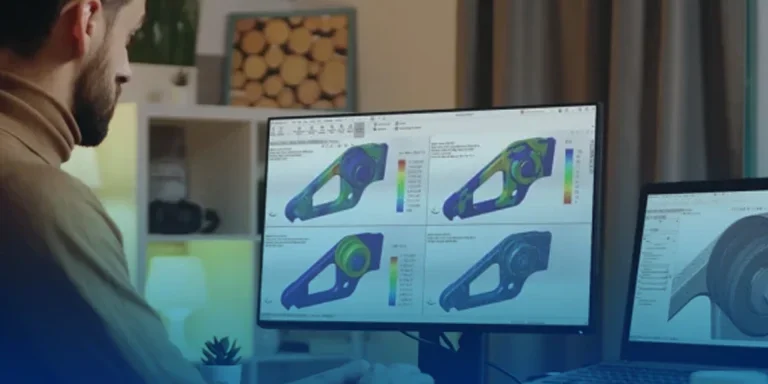
SOLIDWORKS Simulation Professional Training
SOLIDWORKS Simulation Professional training is designed to advance your understanding of SOLIDWORKS Simulation for deeper structural analysis.
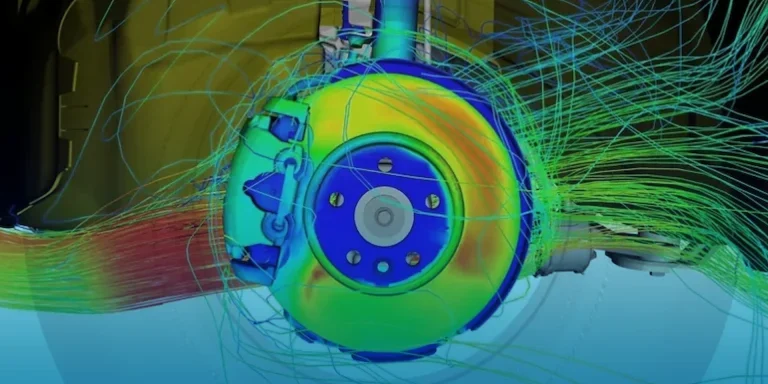
SOLIDWORKS CFD Flow Simulation Training
Learn how to perform computation fluid dynamics analysis within SOLIDWORKS CFD Flow Simulation training course.
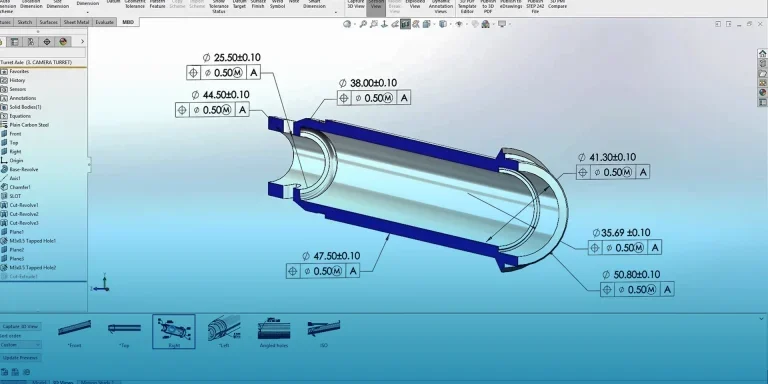
SOLIDWORKS MBD Training
SOLIDWORKS MBD develops your drawingless manufacture skills to produce 3D PDFs and eDrawings files with optimal GD&T presentation.

Using 3DEXPERIENCE Platform and SOLIDWORKS Training
This course on using 3DEXPERIENCE Platform and SOLIDWORKS training explores efficient workflows for in 3DEXPERIENCE alongside SOLIDWORKS.
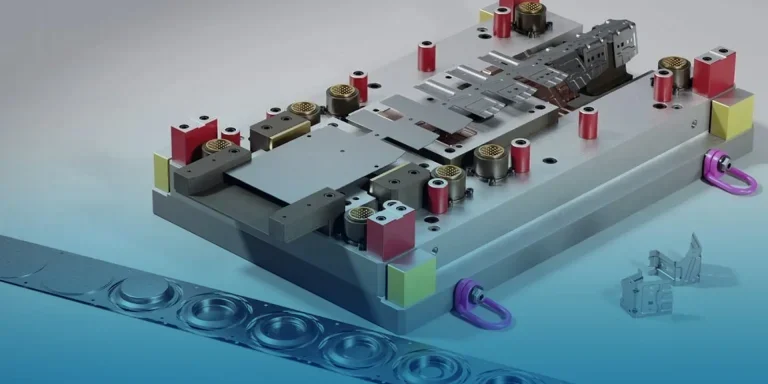
Logopress Training
The Logopress training course is recommended to learn the various flattening, nesting, or die Simulation operations relevant to your processes.
SOLIDWORKS CAM Professional Training
The SOLIDWORKS CAM Professional training course expands your CAM abilities to work with assembly files and Volumill for complex 3D shapes.