











AI Is Becoming Part of Engineering Work, But Engineers Still Own the Decisions
Written by: Sophie Dranfield
Published: Oct 22, 2026
| View All Blogs
AI in engineering workflows is beginning to reduce the effort involved in routine work and help users reach relevant product information more quickly. At the Technology Showcase 2026, engineering leaders, customers and technology specialists discussed where that support is delivering practical value and why engineers must remain responsible for the decisions.
Contributors approached the topic from different positions, including product development, engineering leadership and technology infrastructure. Their comments consistently returned to the work AI could support today, the information required to make it useful and the engineer’s responsibility for assessing the result.
Earlier conversations around AI often centred on what the technology might eventually achieve. Attention is now turning towards defined engineering applications and the conditions required to evaluate them properly. AI is most relevant when it supports a clearly defined piece of engineering work. Its usefulness depends on the information available, while the result still requires professional judgement and appropriate validation.
Productivity Is the Immediate Opportunity
 The clearest short-term opportunity is engineering productivity.
Justin Burton, Customer Success and Adoption Strategy Director at Dassault Systèmes, identified productivity as the most practical value currently emerging from AI. He described tools designed to automate busy work and reduce the time engineers spend on activities that add limited value to the finished product.
That does not necessarily mean handing an entire engineering process to an AI system. The first gains may appear within individual activities that already consume time.
An engineer working with a large assembly might use AI assistance to identify the components affecting performance. The activity is limited in scope, but reducing the time spent investigating the assembly leaves more time for the engineering decision that follows.
John Burton, EMEA Workstation Lead at Dell Technologies, described AI as a way to enhance day-to-day workflows by reducing administrative effort and leaving more time for work that requires engineering expertise.
Productivity gains depend on the task being addressed and the maturity of the capability. They are also influenced by the information available to support the work. A tightly defined activity gives an engineering team something measurable to evaluate. A broad ambition to “use AI” does not.
Engineers Remain Responsible

The role of the engineer featured repeatedly in event interviews.
AI can suggest an action or help retrieve relevant information. It may support documentation or assist with repetitive modelling work. The output still needs professional assessment.
That distinction matters within product development, where a plausible answer is not automatically a correct answer.
Matt Smith, Head of Engineering and Operations at Gordon Murray Group, put the point plainly:
“There will always be a need for an engineer.”
The wider point was that AI should complement engineering work and release time, rather than remove responsibility from the people making technical decisions.
Nick McFerran, Senior Solutions Consultant at Dassault Systèmes, approached the subject through creativity. AI could support designers and engineers as they develop ideas without replacing the judgement behind those ideas.
This keeps accountability in a familiar position. Engineers already use CAD, simulation and automation to reach decisions. Each technology can extend what a team can evaluate, but the result must still be understood in the context of the product and its intended use.
Engineering AI Needs Engineering Context

General-purpose AI can work with language and widely available information. Engineering work depends on a more controlled body of knowledge.
A useful response may require access to the current model or an approved material specification. Company design standards can influence how the work should be completed, while historical decisions may change the meaning of an apparently straightforward request.
This need for context is central to the direction of AI within engineering software.
Information created during product development can help AI provide assistance that reflects the product being worked on. This includes design data, but it can also include internal guidance and lessons captured during previous projects.
The knowledge held by experienced engineers is especially valuable. A company may have established methods for selecting materials or structuring bills of materials, but some of that guidance may still depend on knowing which colleague to ask. Making approved company knowledge accessible within an engineering workflow could help new employees understand internal standards without repeatedly interrupting experienced team members.
This type of application does not begin with an AI prompt, but with the quality of the information the organisation can provide.
John Russell, Digital Engineering Specialist at Vertical Aerospace, also placed AI within a wider digital engineering environment, where teams need a shared understanding of the product and the decisions affecting it. AI may eventually help users navigate that connected body of knowledge, but the usefulness of the assistance will be shaped by the quality and accessibility of the underlying information.
Trust Cannot Be Treated as a Secondary Issue

Engineering data contains intellectual property and commercially sensitive decisions. Any discussion about AI therefore leads quickly to questions about security and trust.
John Burton referred to the need for guardrails that protect intellectual property while organisations use AI tools. The point is particularly relevant for engineering businesses evaluating a mixture of local and cloud-based processing.
Engineering leaders need to understand which tasks require files to be uploaded and how that information is processed. They also need clarity on whether customer data is used to train external models and how generated outputs return to the organisation’s established data-management environment.
These considerations have practical implications for early evaluations. Sensitive production data is rarely the best place to begin. A controlled exercise using duplicate or approved test files gives teams the opportunity to assess a capability without introducing avoidable risk.
Trust also applies to the output. Engineers need to understand where an answer came from and which source information influenced it. A confident response without traceable evidence may have little value within a controlled engineering process.
AI Readiness Starts with a Defined Problem

A controlled evaluation can focus on one task and involve a small number of users. The team can compare the AI-assisted workflow with its current method before deciding whether the result justifies further investigation.
This approach also prevents AI from becoming the assumed answer to every engineering problem.
A request for AI-generated drawings may reveal that existing templates require attention before any new technology is introduced. In other cases, the underlying requirement may be better addressed through design automation, training or improved data management.
A useful evaluation begins by defining the work and the result required. The available technology can then be assessed against that requirement.
What Happens Next

SOLIDWORKS AI will continue to develop through software updates and feedback from users. Graham Stephenson, Senior Solutions Consultant at Solid Solutions, and James Hankins, Applications Engineer, both highlighted the role customer feedback plays in shaping future SOLIDWORKS development, including the emerging Virtual Companions.
Individual capabilities are developing at different rates. Some can support practical evaluations today, while others require further development before engineering teams can assess them reliably. That position will continue to change as new releases arrive.
Engineering organisations therefore need a measured approach. The work begins with identifying where time is being lost and which information supports the task. A small evaluation can then establish whether an AI-assisted workflow produces a reliable result.
Responding in this way avoids treating AI as either a finished answer or an idea for the distant future.
As John Russell observed:
“AI is a tool for us, like CAD was many years ago.”
That comparison provides a useful way to view the current stage of adoption. CAD changed engineering work over time because it was applied to real design requirements and developed through continued use. AI will need to prove its value in the same way.
Engineers will remain responsible for the decisions. The opportunity lies in giving them better access to information and more time for work that depends on their expertise.
Key Takeaways
- AI is beginning to support clearly defined activities within engineering workflows.
- Productivity depends on choosing a suitable task and evaluating the result against the current process.
- Engineering information and company knowledge influence the usefulness of AI assistance.
- Engineers remain responsible for validating technical outputs and protecting sensitive data during evaluation.
Categorised as: AI
Continue with SOLIDWORKS AI
SOLIDWORKS AI is developing around practical engineering work, with resources covering current capabilities, Virtual Companions and the foundations needed to evaluate AI responsibly.

Related Posts
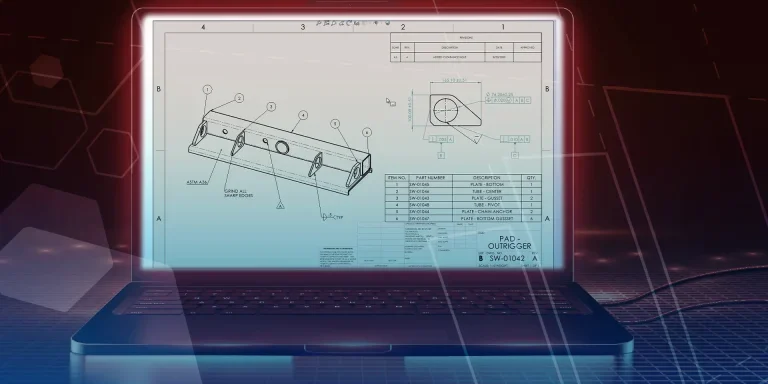
Assistive AI for Drawing Creation | What’s New in SOLIDWORKS Drawings & MBD 2026
SOLIDWORKS 2026 is the first release we’re seeing equipped with multiple AI tools as Dassault…

AI in SOLIDWORKS
Note: Some of the features and videos referenced in this article are currently released in…
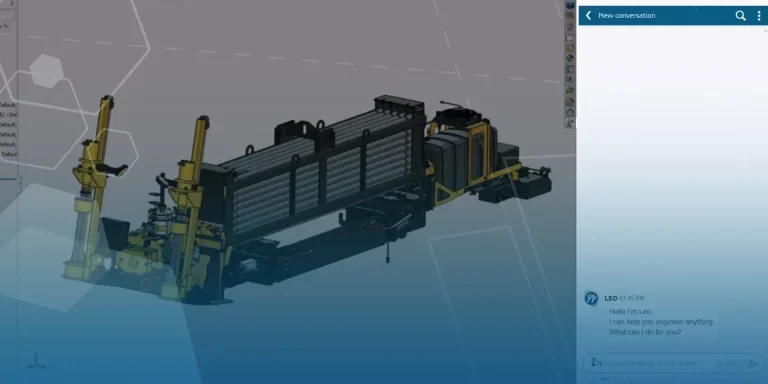
What’s New in the Functional Delivery 02 Update | SOLIDWORKS Design & 3DEXPERIENCE Platform
SOLIDWORKS 2026x FD02 continues the cycle of Functional Deliveries, introducing a new set of enhancements…

Understanding SOLIDWORKS AI Blue Tokens: A Practical Guide for Engineers
Artificial intelligence is rapidly becoming a valuable engineering tool, helping designers and engineers find information…
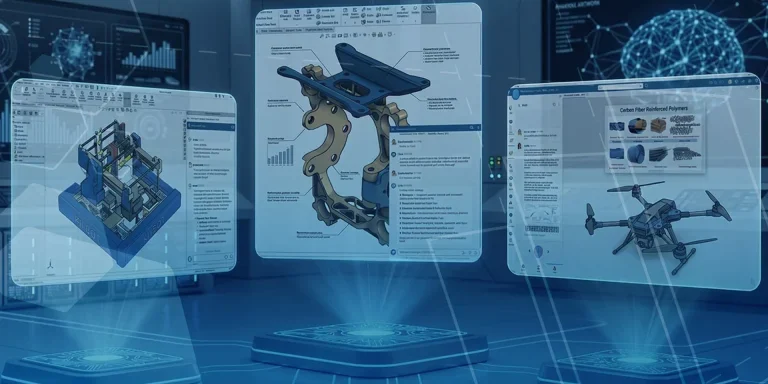
SOLIDWORKS AI Virtual Companions: Meet AURA, LEO and MARIE
Artificial intelligence is rapidly becoming a practical tool for engineers, helping teams work more efficiently,…

Technology Showcase 2026: Engineering the Future, Today
As product development becomes faster, more connected and more complex, one question matters more than…