







CFD Simulation: Validating SOLIDWORKS Flow Simulation for Thermal Analysis

Written by: Tom McHale
Published: Sep 7, 2023
| View All Blogs
SOLIDWORKS Simulation is used to predict a wide range of design and engineering scenarios using real-world physics in a virtual environment.
In this series, we’re looking at three simulation applications: fluid dynamics, linear analysis, and electronic cooling. We’ll validate the results of these studies to show you how accurate virtual testing with SOLIDWORKS can be.
Last time we looked at how we could validate the performance of the finite element analysis (FEA) software SOLIDWORKS Simulation through a pre-tensioned pin.
CAN I TRUST SOLIDWORKS SIMULATION?
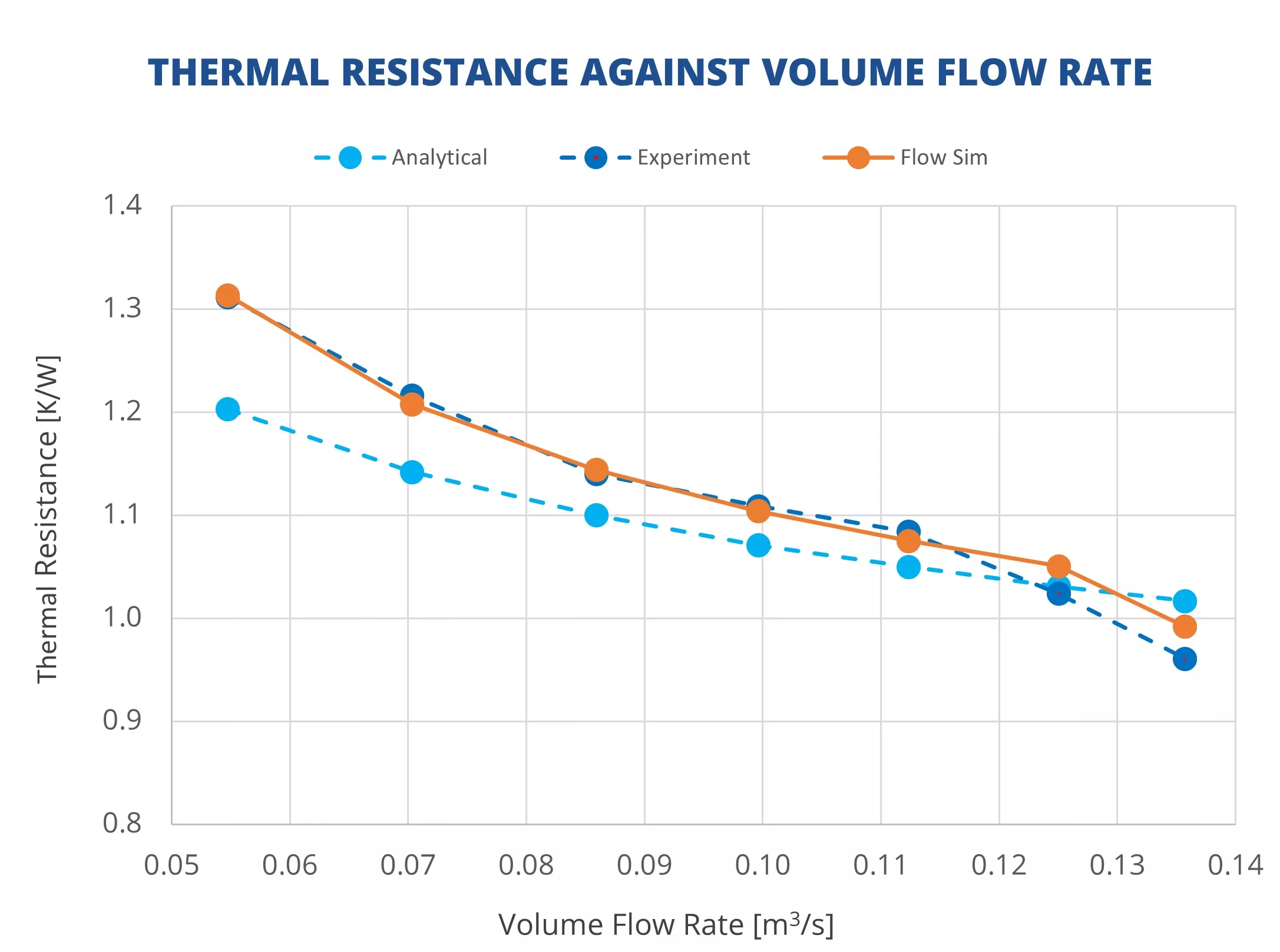
We’re putting SOLIDWORKS Flow Simulation to the test with a conjugate heat transfer scenario, comparing thermal resistance data from an experimental test rig against a virtual setup in SOLIDWORKS Flow Simulation.
Comparing results from the virtual analysis against physical test data is an excellent way to validate and have confidence in the software, as it proves that it can replicate what happens in a real-world scenario.
Ultimately, this allows you to predict whether a new design will meet its intended purpose prior to investing in prototyping or production, resulting in significant time and cost savings.
Preparing the Model for Analysis
The setup involves a computer chip (power transistor) and heat sink described in Unshrouded Plate Fin Heat Sinks for Electronics Cooling: Validation of a Comprehensive Thermal Model and Cost Optimization in Semi-Active Configuration by Ventola et al.
The experimental test rig described by Ventola et al. is show below.
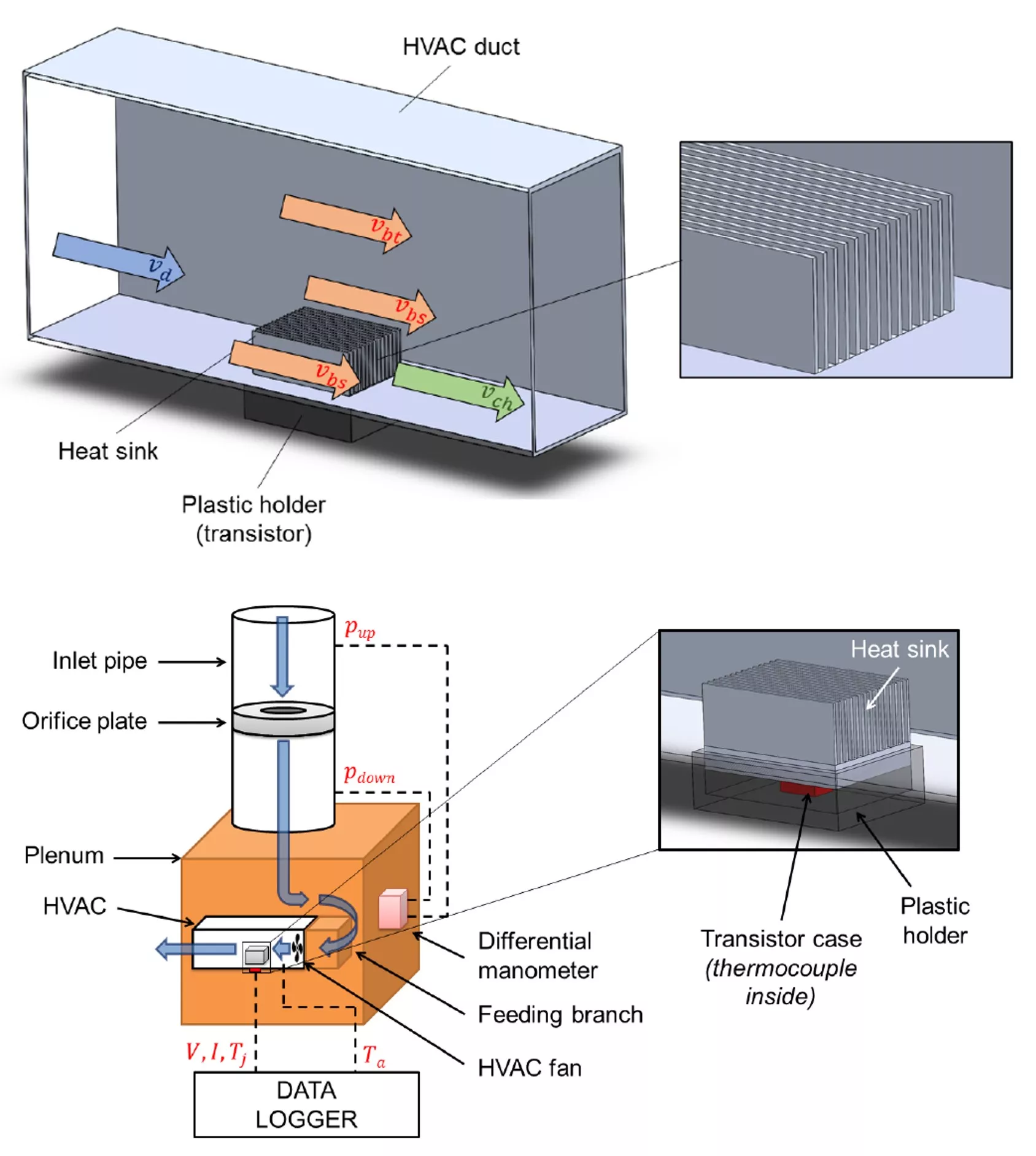
A computer chip (transistor) is mounted on a heat sink which has a thermocouple fitted to record the temperature. This is then fitted into a ducting system with fan to provide cooling.
To replicate the test rig, a 3D CAD model was created in SOLIDWORKS.
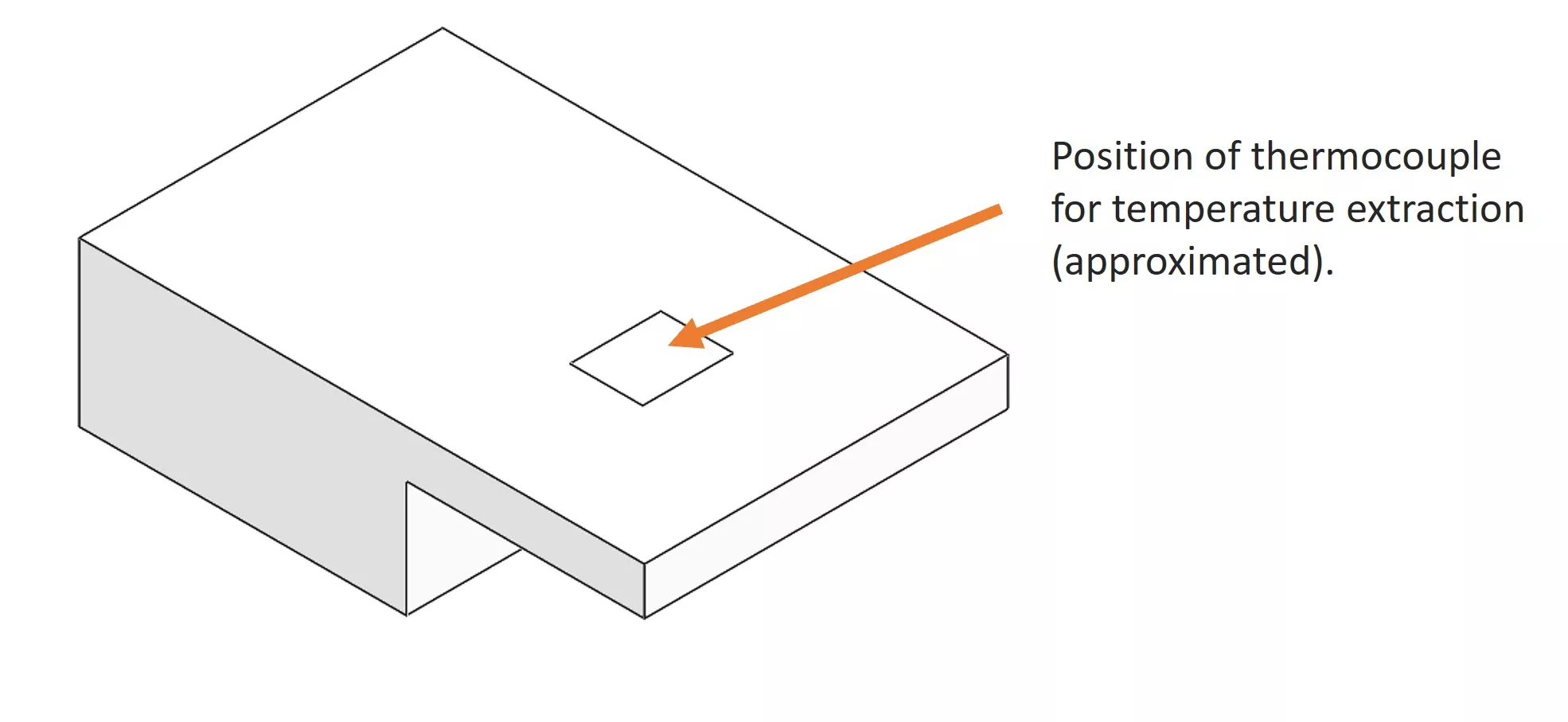
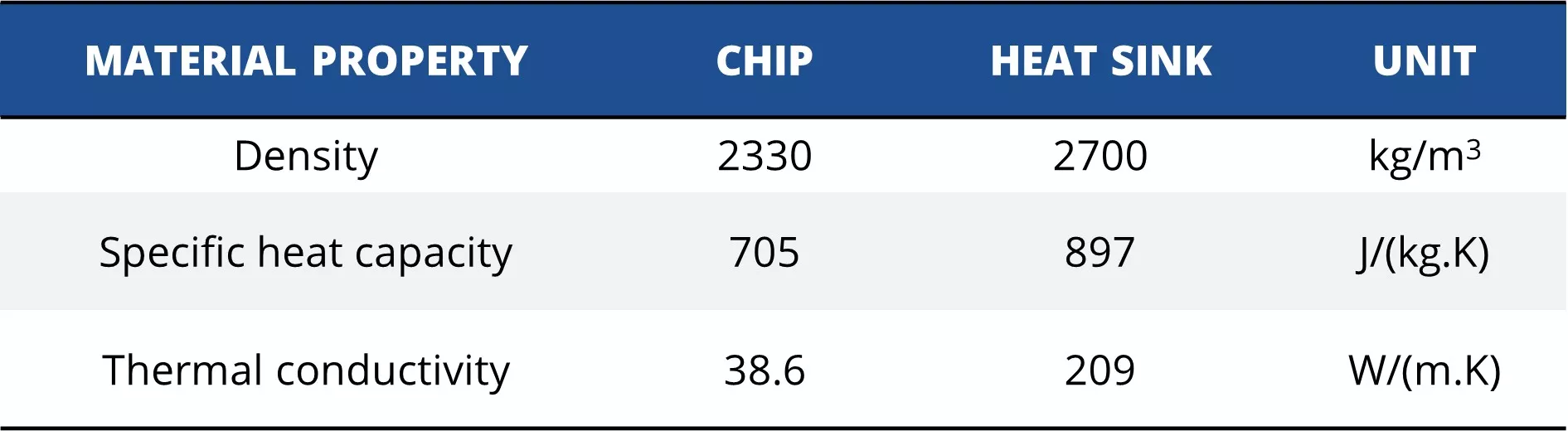
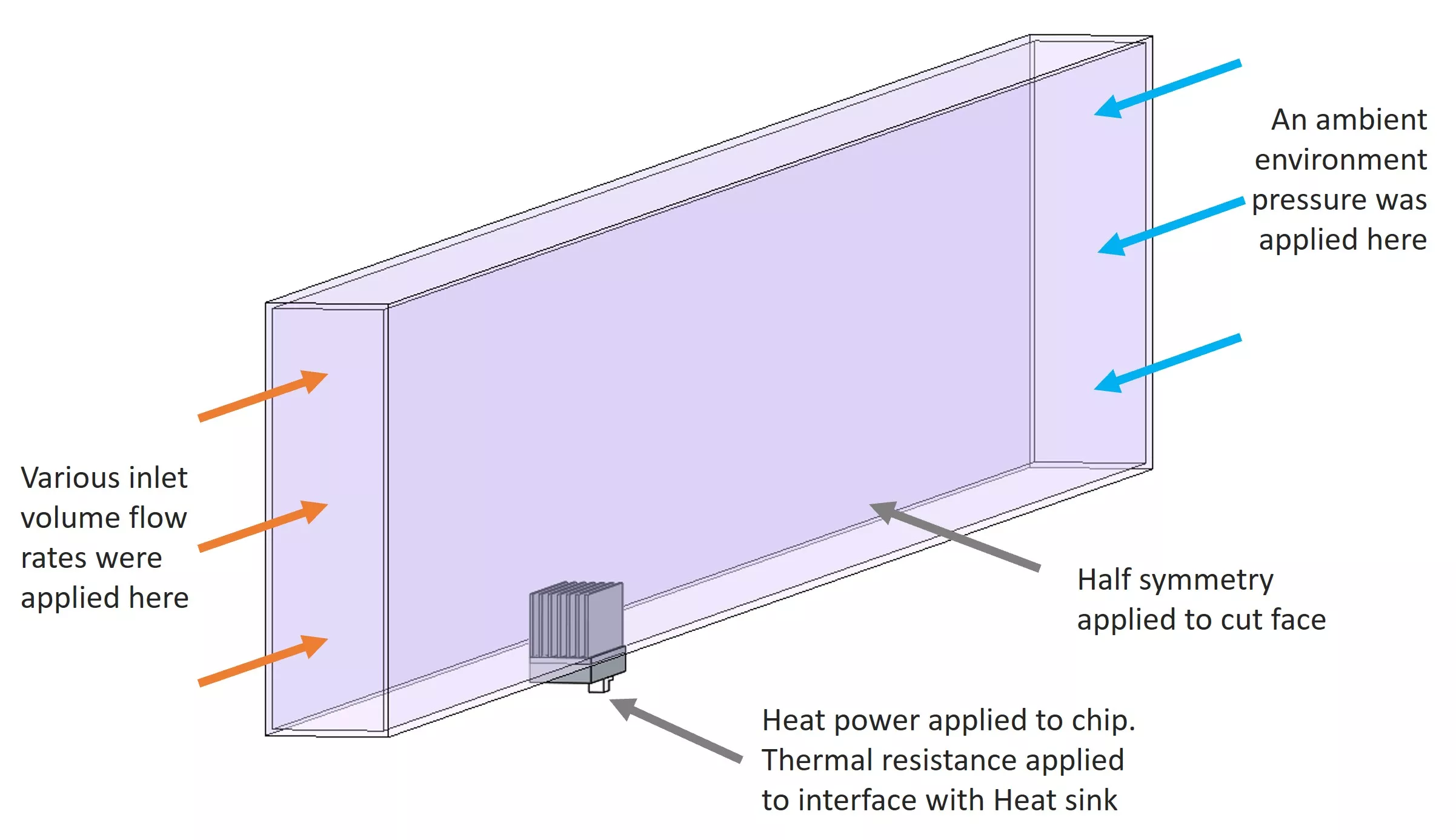
A chip component provides the heat power.
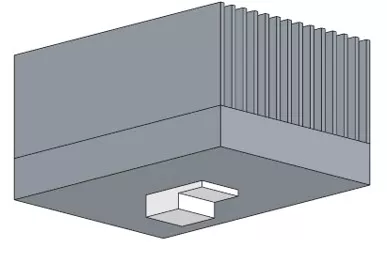
An aluminium heat sink sits on top.
An air cavity was created which surrounded the fins of the heat sink (at ambient pressure and temperature). This meant the flow simulation could be considered as an internal study.
Heat conduction and gravity were also activated.
BOUNDARY CONDITIONS
STUDIES
Several studies were run at various volume flow rates corresponding to different fan speeds on the experimental test rig.
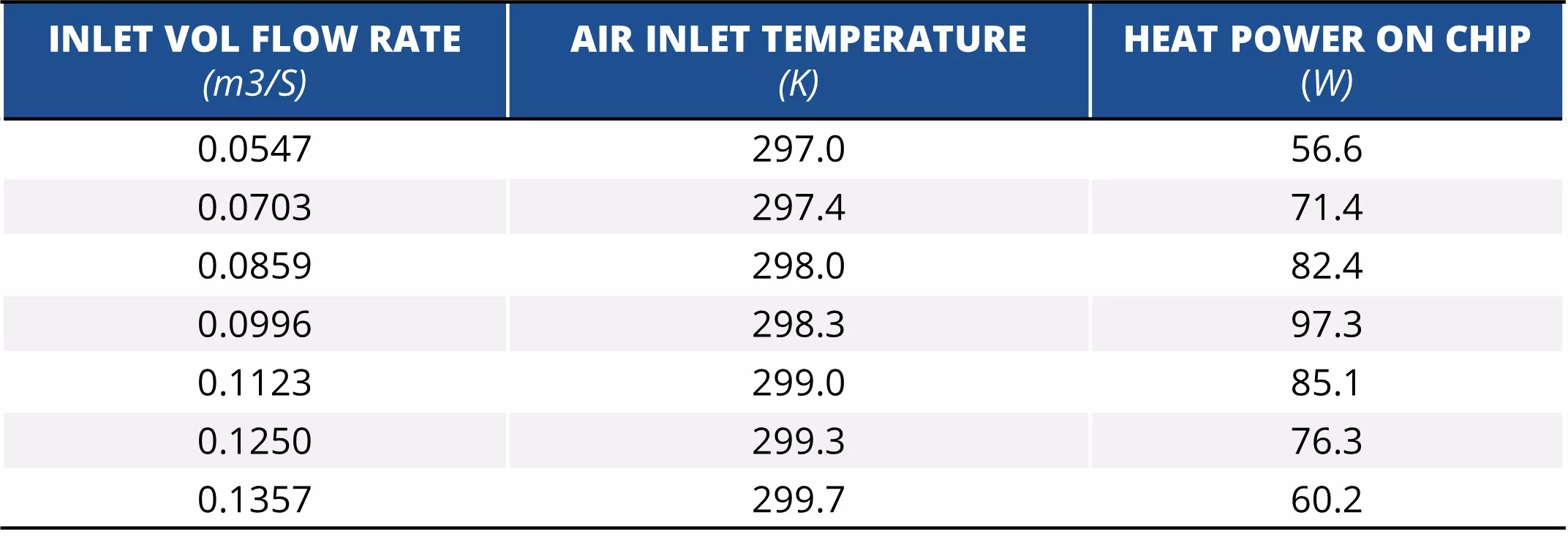
Each one corresponded to a particular air temperature and heat power on the chip.
MESH
A mesh sensitivity study was run with just under 2.5 million cells.
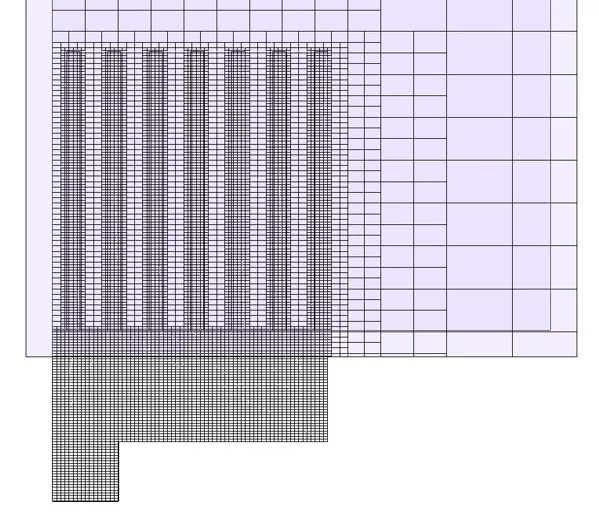
The outputs of this showed little difference when compared against a faster model containing less than 90 thousand cells (within 4%).
Results for the fast simulation are reported for all except the test case (marked with an *).
Results
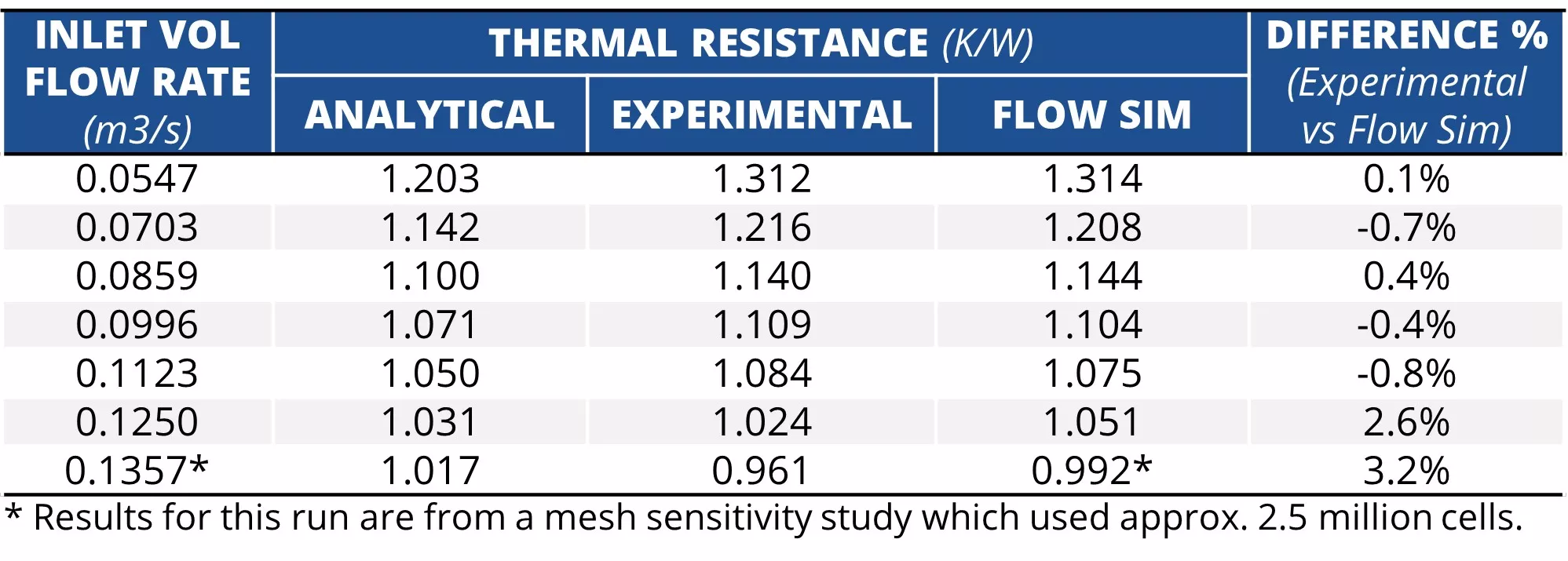
The following formula was used to calculate the thermal resistance:

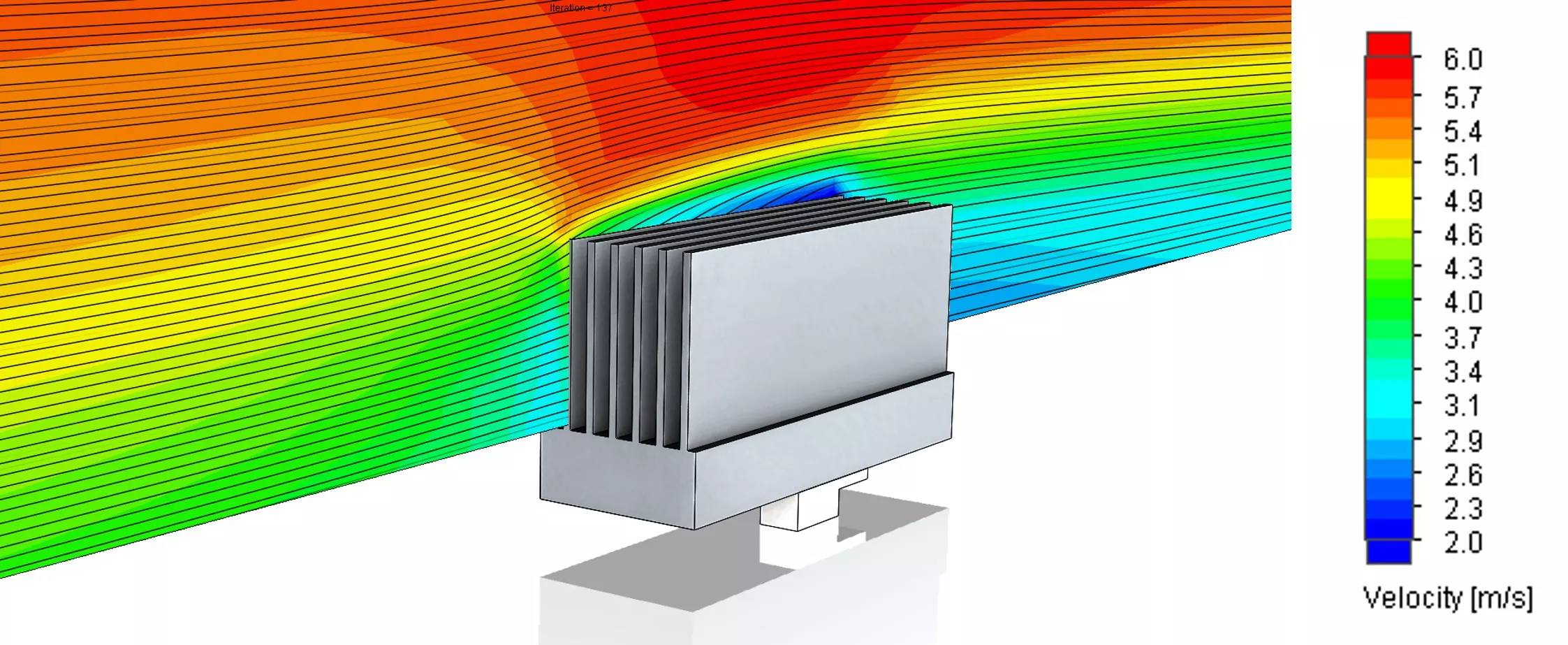
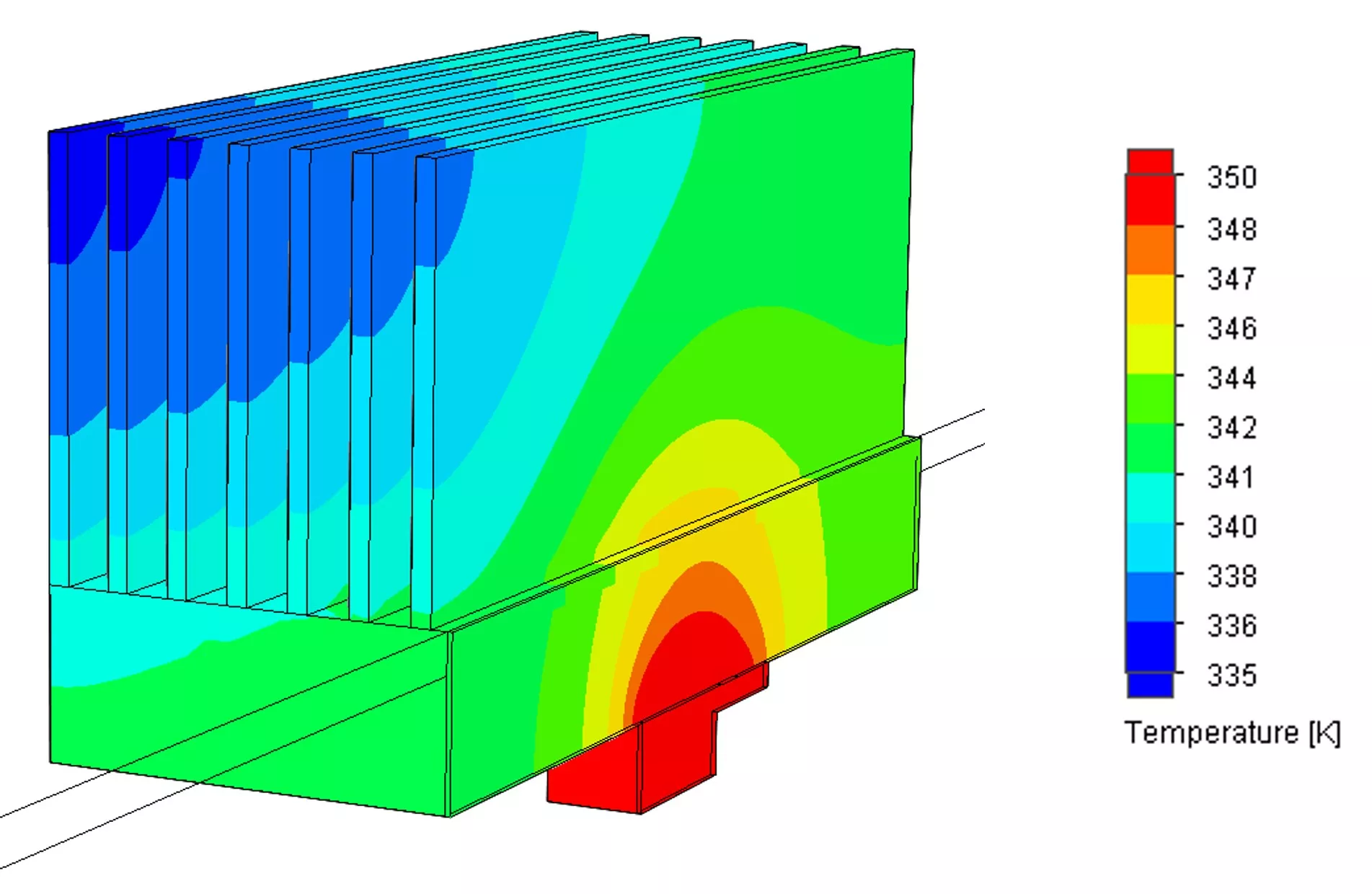
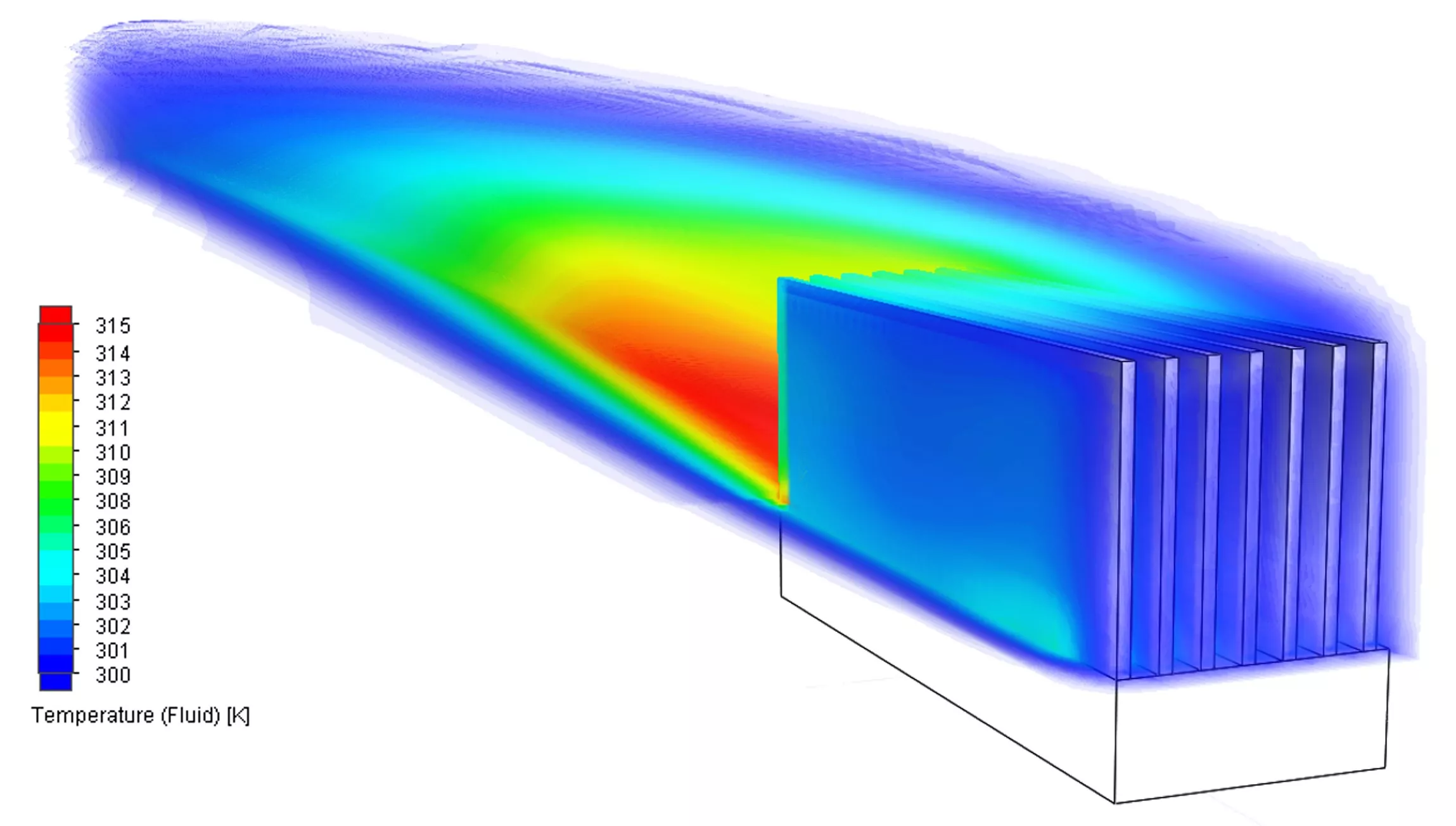
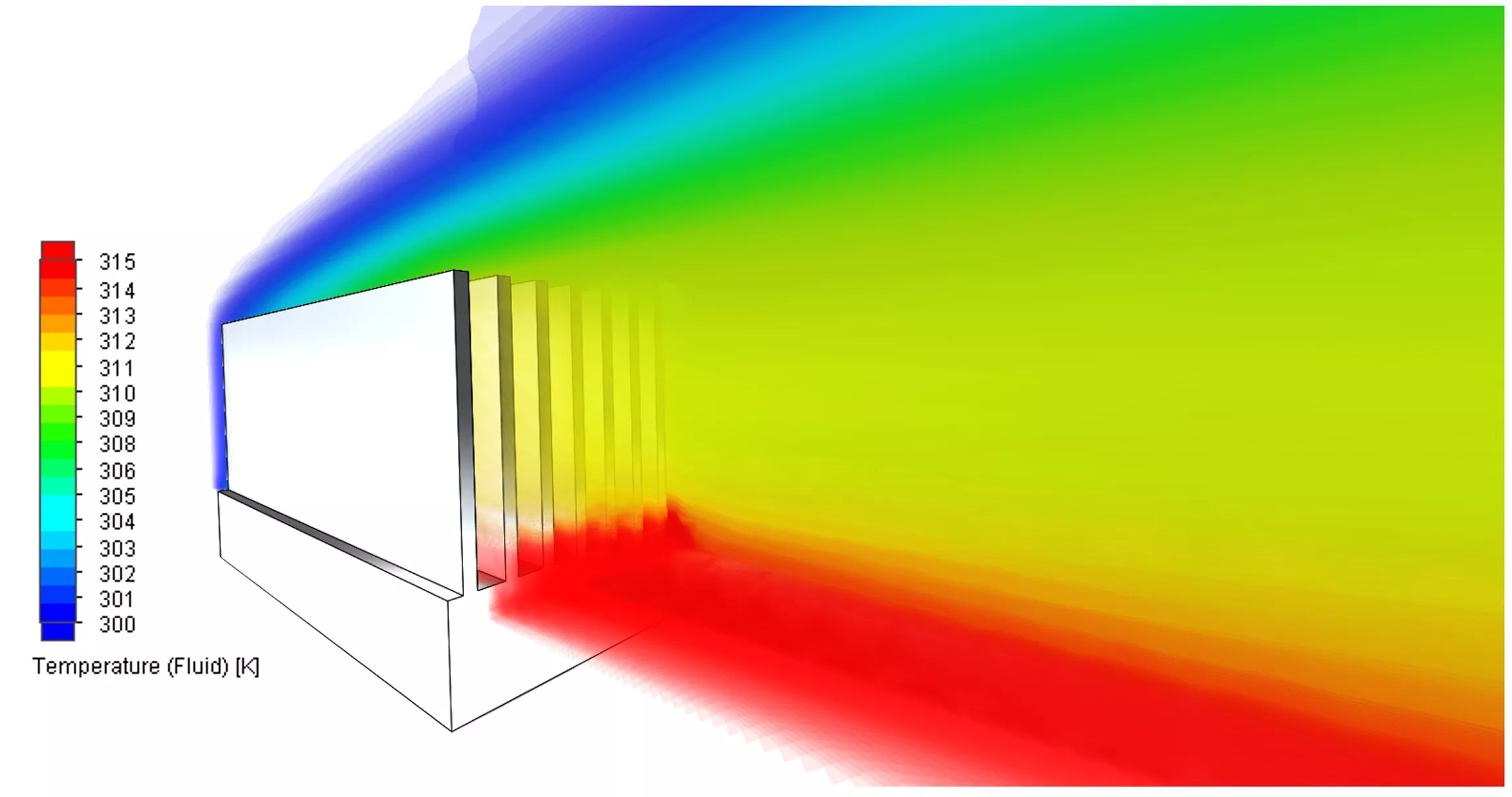
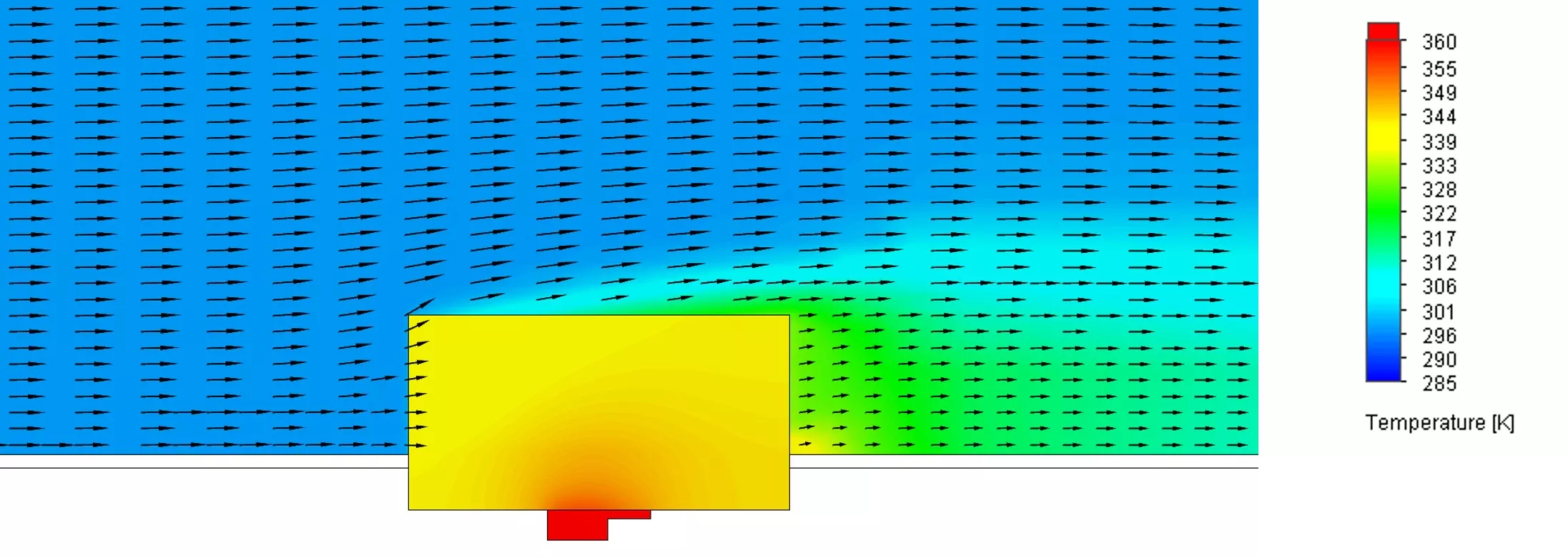
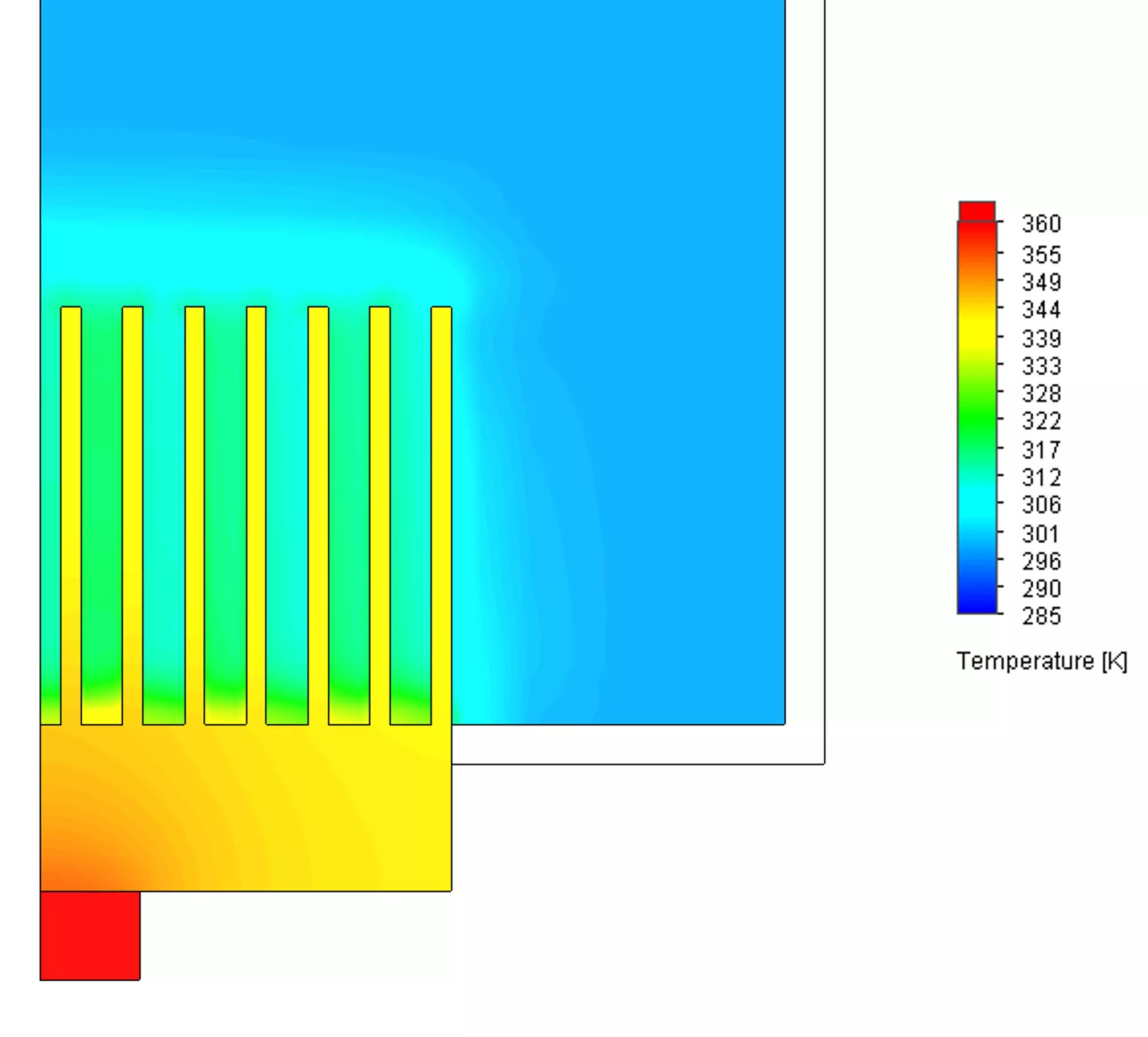
FLOW SIMULATION PLOTS
CONCLUSION: SOLIDWORKS SIMULATION IS RELIABLE
SOLIDWORKS Flow Simulation matched the experimental test rig data to within 4% of the calculated thermal resistance values. This is an excellent result.
From this point onwards, having a validated model means the effect of any new design changes can be quickly investigated through SOLIDWORKS Flow Simulation with confidence to avoid any costly failures.
It can also help to optimise the design by answering questions such as:
- Can a cheaper fan be used?
- Would a higher power chip overheat?
- Does the heat sink need to be so big?
- Would other components be cooled enough if added?
- Can the position of the fan be changed to make the design more compact?
- Would restricted access cause ventilation dead spots?
Adding the power of SOLIDWORKS Flow Simulation to your design portfolio means having the ability to answer all these questions more. It allows you to design in an affordably rapid manor and try out many “What if…?” scenarios that would simply take too long, or be too costly by and other method.
Take the Next Steps…
If you need help with SOLIDWORKS Simulation, our team can help you achieve accurate results and sharpen your skills.
Here’s a quick rundown of how we can help you get the best from SOLIDWORKS Simulation and virtual testing with our Simulation services.
Not only do we offer CPD-accredited training courses, but also finger-tip access to an expert Technical Support team and consultants who will tailor to your needs.
Categorised as: SOLIDWORKS Design | Software
Get a SOLIDWORKS Quote
Interested in SOLIDWORKS? Contact us for questions, trials, or demos by clicking the button below or call 01926 333777. Our experts will help you find the perfect solution.

Related Posts
How to Find Reaction Forces in SOLIDWORKS Simulation
SOLIDWORKS helps us to find resultant forces through simulation studies. These virtual tests reduce the need for physical prototypes and give us an accurate answer.

Setting number of decimal places in a table on a drawing
When creating an equation in a drawing general table, is it possible to define the…
SOLIDWORKS Smart Fasteners
SOLIDWORKS Smart Fasteners is a really useful time saving tool, allowing you to automatically insert toolbox fasteners such as bolts and screws into an assembly providing there is a standard hole.
Why is my Flat Pattern not showing in SOLIDWORKS Drawings?
This may be linked to how the drawing is saved or it can be related to how sheet metal parts are displayed in drawings, read on to find out how to fix it.

SOLIDWORKS Tips: Are you Making this Common Mistake in Fatigue Analysis?
Simulation is a vital and complex engineering need. Fortunately, SOLIDWORKS makes it easy to test, correct mistakes and obtain accurate results.

SOLIDWORKS Visualize. Why go pro? – 6 Post Processing
In this blog we will be look at the post-processing options that can be found in SOLIDWORKS Visualize

SOLIDWORKS Visualize. Why go pro? – 7 Lighting
SOLIDWORKS Visualize uses a non-biased rendering engine, which allows for physically accurate lighting within a scene. It generates images with high amount of realism and correct set up can replicate photo studio lighting.
How to Get Your Serial Number for SOLIDWORKS Visualize Standard
Want to download Visualize to make photorealistic renders? Follow this guide for accessing your Visualize serial number that comes bundled in with SolidWorks Professional and Premium.
How to Recover SOLIDWORKS Files After a Crash
SOLIDWORKS has two different methods to help you recover from an unexpected crash or loss of data in the form of auto-recovery and back-up settings.
Redesigning Santa’s Sleigh in SOLIDWORKS
Every year Father Christmas has to fly in his sleigh to deliver presents to boys and girls all over the world in just one night. To put this into perspective, it takes a little under 24 hours to fly from London (UK) to Sydney (Australia) in a streamlined Boeing 747, whereas Father Christmas’ mode of transport is believed to be a rather non-aerodynamic sleigh.