









CAD to Circuit: Oulton Park
Written by: Sophie Dranfield
Published: Jun 23, 2026
| View All Blogs
Part 2 | Engineering Under Pressure
Engineering doesn’t happen in isolation.
It happens under pressure. With constraints. With consequences.
At Oulton Park, racing alongside the British Touring Car Championship (BTCC), those pressures arrived quickly.
Following the first outing at Snetterton, where the car proved its reliability in competition, the next step was development, by identifying limitations and improving performance where it mattered.
The Alfasud was being pushed harder than ever. The pace of the field had stepped up. The environment was more demanding. And one limitation became clear almost immediately.
Brake temperature was becoming the limiting factor.
The Problem
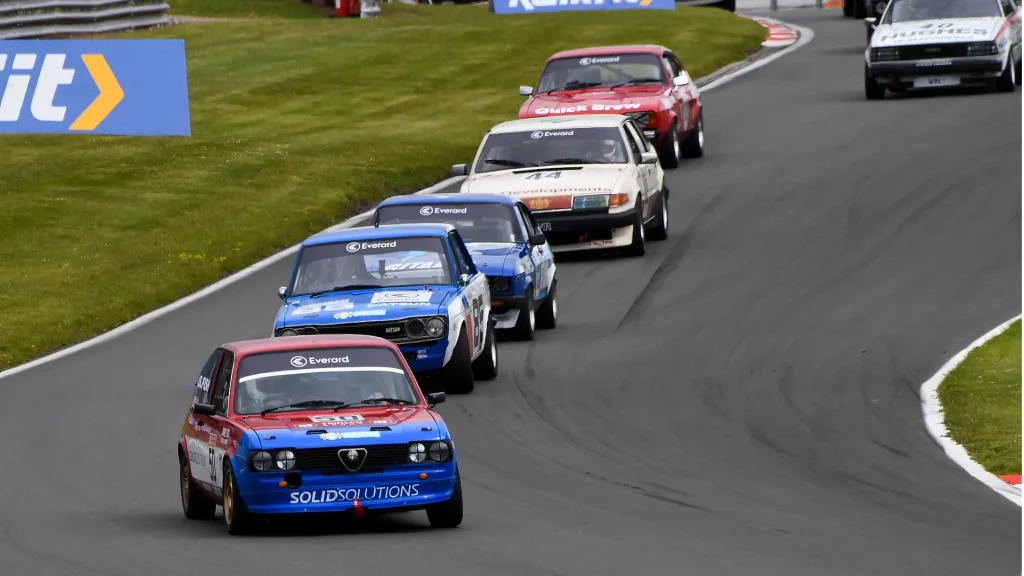 Oulton Park is hard on brakes.
A natural terrain circuit, constantly loading and unloading the car through fast, cambered corners, it builds heat lap after lap. Cooling is critical. Consistency depends on it.
But the challenge here wasn’t just managing temperature.
Regulations restricted changes to the original bodywork.
Packaging space was limited.
Airflow paths were constrained.
The solution had to work within those limits.
The Approach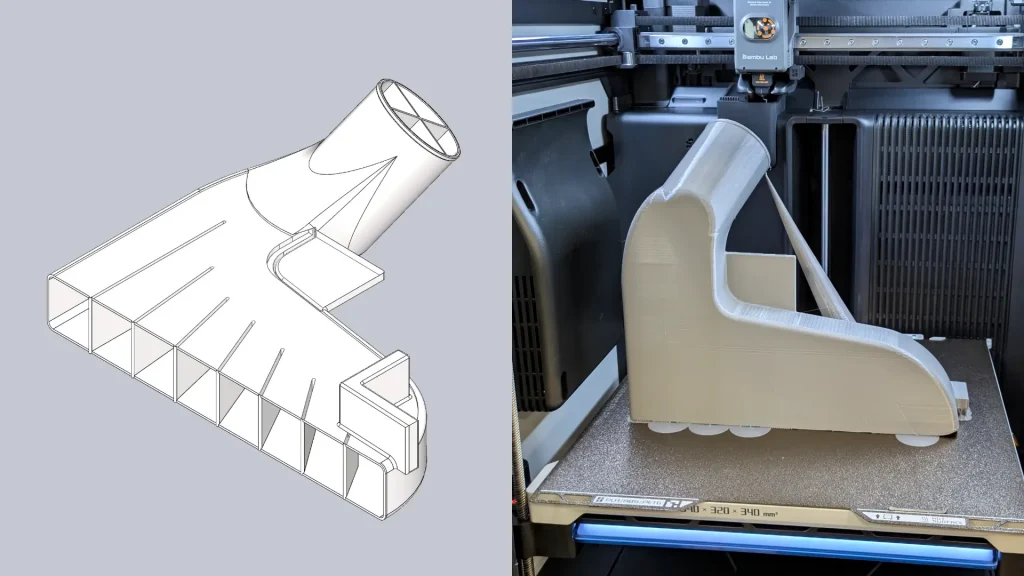
Rather than adapting an off-the-shelf solution, a new brake cooling duct was developed from first principles in SOLIDWORKS.
The aim was not simply to move air, but to manage it.
The design introduced:
- A front-mounted intake, positioned to capture high-pressure airflow
- Internal vanes, dividing and directing airflow through the duct
- A controlled transition from rectangular intake to round outlet
- A geometry that could be installed without modifying the car’s bodywork
This wasn’t cosmetic.
It was airflow management, tailored to the car, the circuit, and the constraints.
From Model to Part
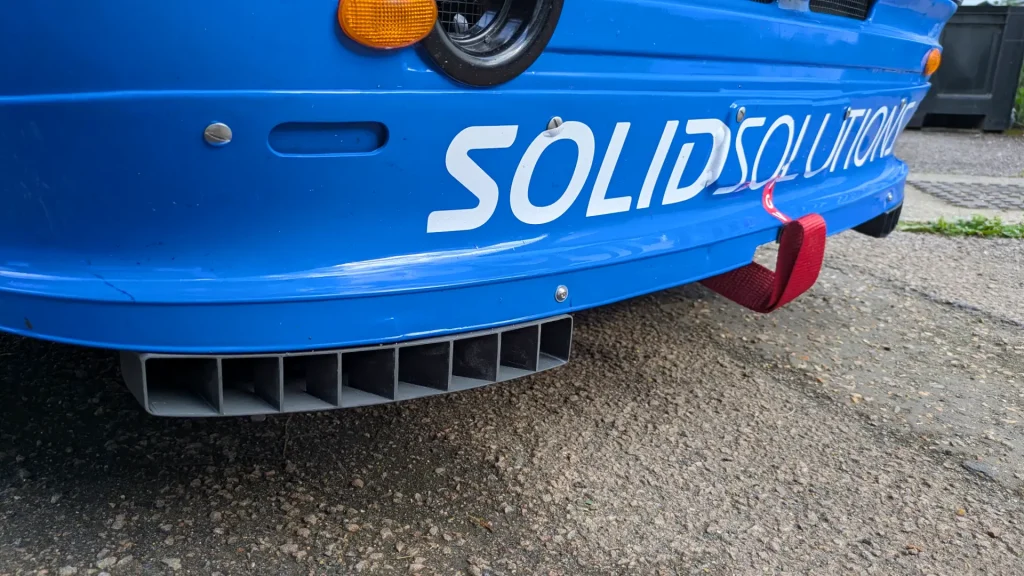 With limited time between sessions, traditional manufacture wasn’t viable.
The duct was produced using the Bambu Lab H2S, in PETG, based on material and process advice from the team at Solid Print3D.
The part was printed overnight, removed and prepared in the morning, and installed on the car ahead of the next session
No tooling.
No lead time.
No compromise on design intent.
From CAD model to working component, ready to run within hours.
Tested Where It Counts
 Motorsport doesn’t reward intention.
It rewards outcome.
With the new duct fitted, the car returned to the circuit.
The difference was immediate.
- New duct: ~160°C
- Previous setup: ~210°C
Same car.
Same circuit.
Same conditions.
A reduction of around 50°C in brake temperature.
Not simulated.
Not estimated.
Proven on track.
The Race Weekend
The results came at a race meeting of a different scale to the rest of the season.
The BTCC support event at Oulton Park brought large crowds, a full programme, and a busy, professional paddock.
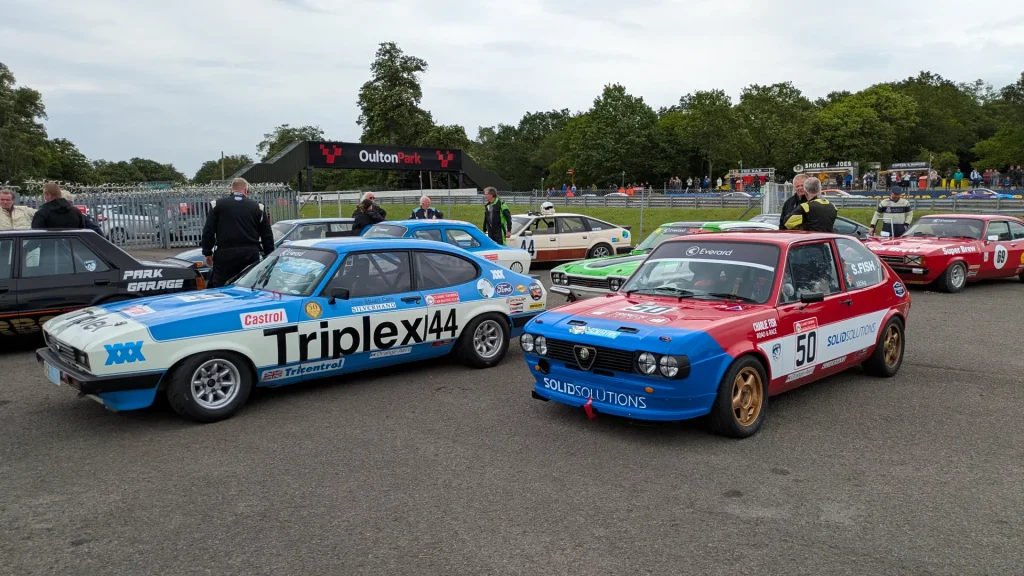
Qualifying took place in damp conditions, allowing the Alfa‑Sud to compete strongly despite a power deficit, securing a mid-field grid position in a mixed field.
Across three races, the car ran consistently with close racing throughout the pack, incremental gains in lap time across sessions, and a growing confidence in the car under braking.
The final race, televised live, delivered the most competitive running of the weekend. A sustained battle within a pack of more powerful, rear-wheel-drive machinery, with the Alfasud holding its own under pressure.
Through it all, the braking remained consistent.
Why This Matters
This wasn’t a theoretical exercise.
It was a defined problem, addressed through targeted design in SOLIDWORKS, rapid manufacture through 3D printing, and real-world validation under race conditions
No controlled environment.
No repeatable lab test.
Just design, build, and evaluation under pressure.
This is where engineering becomes accountable.
What Comes Next?
Development doesn’t stop here.
The brake duct will be refined further, with additional iterations and spares prepared ahead of the next event.
Attention is already turning to the next limitation – driver cooling – with new airflow solutions being developed using the same process.
The next test takes place at the Silverstone Classic, 24th–26th July.
A faster circuit.
Higher loads.
Different demands.
Continue the Journey
CAD to Circuit Series
Part 1 | Engineering Tested at Speed
Snetterton Circuit and the first competitive outing for the Alfasud.
Part 2 | Engineering Under Pressure
How SOLIDWORKS and 3D printing solved a brake cooling challenge at Oulton Park.
(Current article)
Part 3 | Keeping Cool at Silverstone
Developing and validating a new driver cooling solution at Silverstone.
Watch the Races
Further onboard footage and race content can be found on the Fish Fabrications YouTube channel.
Follow Fish Fabrications
Technology Used
Categorised as: Customer Stories | Industry Insight | News | SOLIDWORKS Design
What's New in SOLIDWORKS?
Explore the latest innovations in SOLIDWORKS with our exclusive breakdown of live webinar, giving you on-demand access to the insights that matter most to your workflow.
Related Posts

How to Find Reaction Forces in SOLIDWORKS Simulation
SOLIDWORKS helps us to find resultant forces through simulation studies. These virtual tests reduce the need for physical prototypes and give us an accurate answer.

Setting number of decimal places in a table on a drawing
When creating an equation in a drawing general table, is it possible to define the…
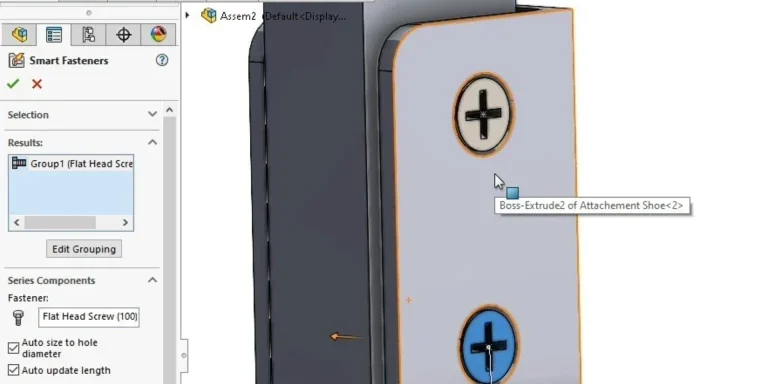
SOLIDWORKS Smart Fasteners
SOLIDWORKS Smart Fasteners is a really useful time saving tool, allowing you to automatically insert toolbox fasteners such as bolts and screws into an assembly providing there is a standard hole.
Why is my Flat Pattern not showing in SOLIDWORKS Drawings?
This may be linked to how the drawing is saved or it can be related to how sheet metal parts are displayed in drawings, read on to find out how to fix it.

SOLIDWORKS Tips: Are you Making this Common Mistake in Fatigue Analysis?
Simulation is a vital and complex engineering need. Fortunately, SOLIDWORKS makes it easy to test, correct mistakes and obtain accurate results.
How to Recover SOLIDWORKS Files After a Crash
SOLIDWORKS has two different methods to help you recover from an unexpected crash or loss of data in the form of auto-recovery and back-up settings.
Redesigning Santa’s Sleigh in SOLIDWORKS
Every year Father Christmas has to fly in his sleigh to deliver presents to boys and girls all over the world in just one night. To put this into perspective, it takes a little under 24 hours to fly from London (UK) to Sydney (Australia) in a streamlined Boeing 747, whereas Father Christmas’ mode of transport is believed to be a rather non-aerodynamic sleigh.
SOLIDWORKS Grid Systems – hidden away, but very useful!
Rory Niles provides an insight into the uses for Grid Systems within SOLIDWORKS 2018
Furniture Design Made Easy with SOLIDWORKS
Calling all furniture and interior designers: the days of creating square cabinets are over. What if we told you there’s a much easier way to bring your products to life?
Here’s 10 reasons why we feel SOLIDWORKS is better than any other software, especially if you’re designing furniture:
Making 3D Textures from Images on SOLIDWORKS
Turn images into 3D geometry with brand new SOLIDWORKS 3D Textures Feature