






CFD Simulation: Validating SOLIDWORKS Flow Simulation with Ventilation Efficiency
Written by: Tom McHale
Published: Aug 17, 2023
| View All Blogs
SOLIDWORKS Simulation can be used to calculate a wide range of studies using real-world physics in a virtual environment.
In this series, we’re looking at three simulation applications: fluid dynamics, linear analysis, and electronic cooling. We’ll validate the results of these studies to show you how accurate virtual testing with SOLIDWORKS can be.
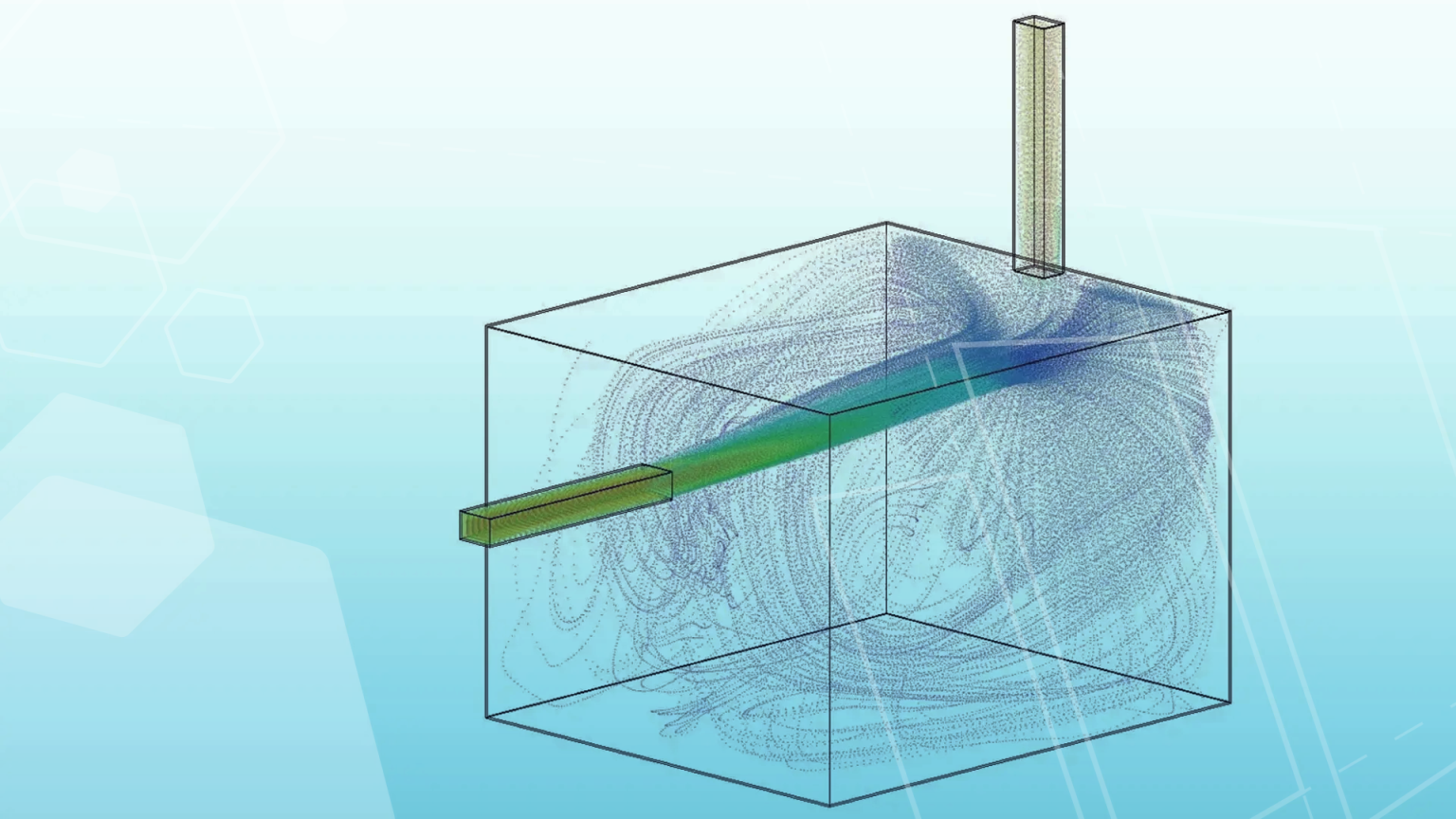
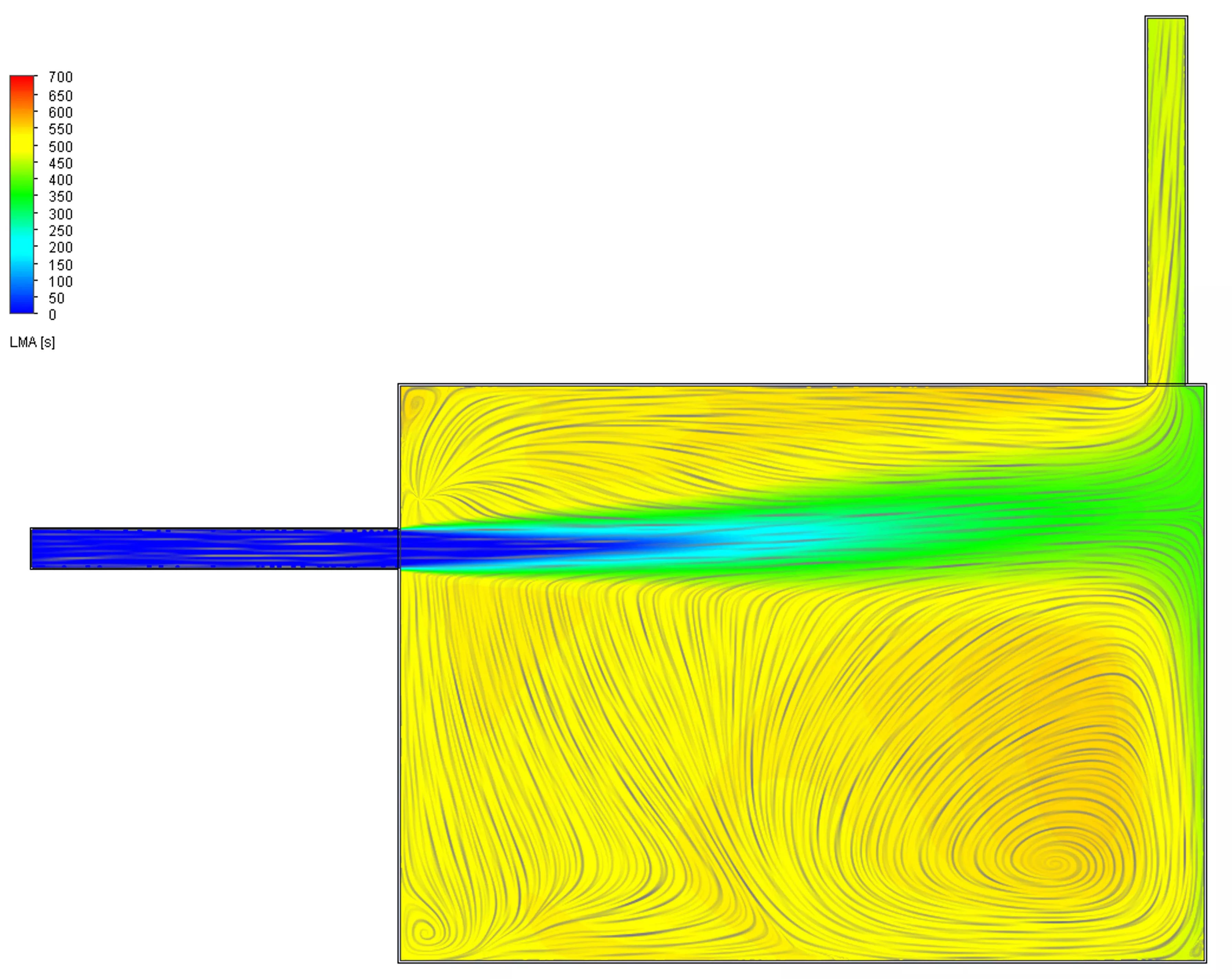
Starting with SOLIDWORKS Flow Simulation for computational fluid dynamics (CFD) analysis, we’ll investigate the efficiency of ventilation in a room by using the Local Mean Age (LMA) parameter to calculate the time taken for air to pass through a room.
We’ll compare the results againsta test rig by Bartak et al to comment on the accuracy of the solution.
LMA is important when considering ventilation efficiency and removal of contaminants from an environment – lower values indicate better ventilation.
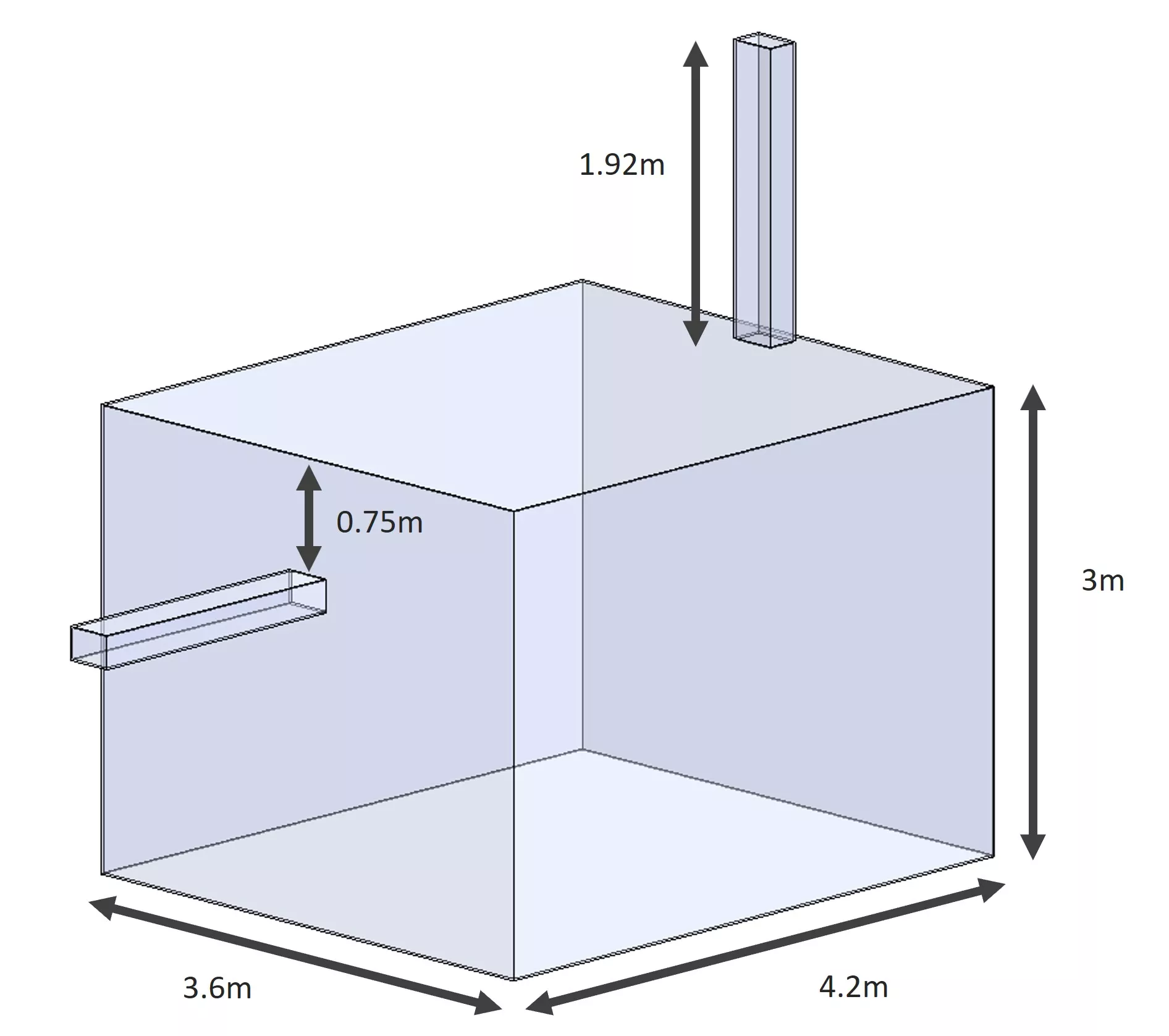
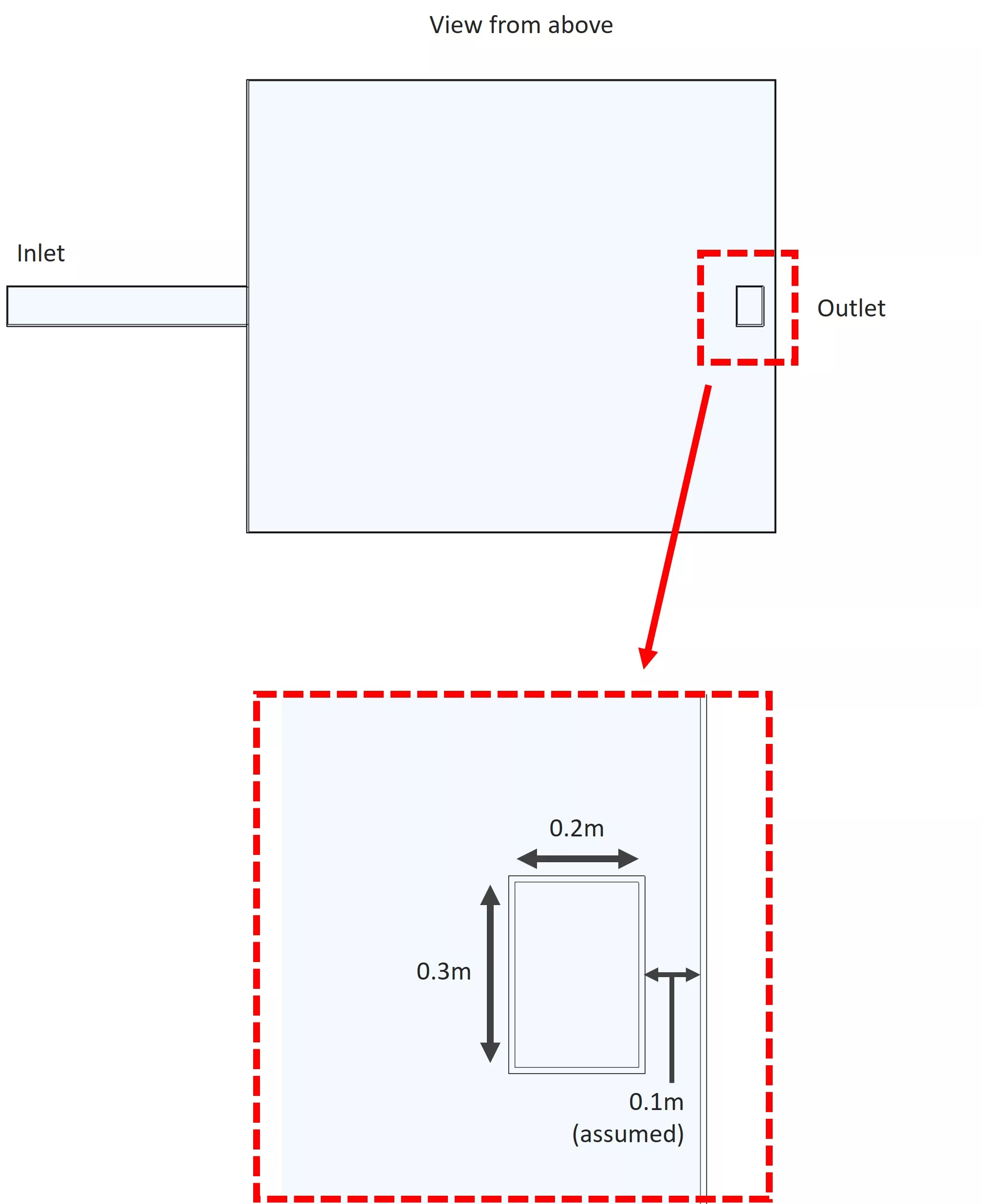
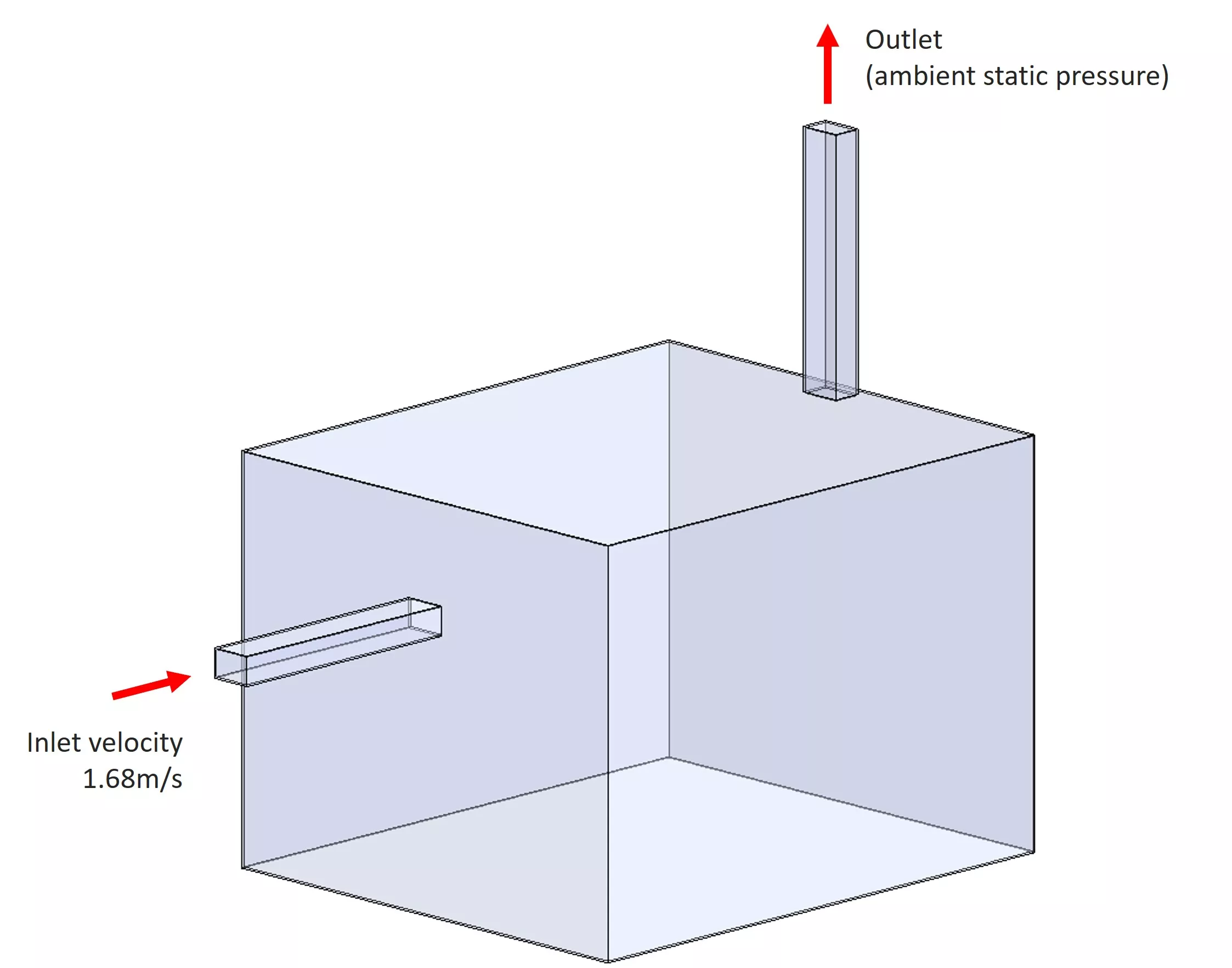
The cavity space analysed by Barktak et al is represented using this model.
An additional channel of length of 1.92 m was applied on the inlet and outlet to allow the fluid velocity to profile to develop in the analysis.
PREPARING THE ANALYSIS
Default initial conditions were assumed (ambient air pressure and temperature), and gravity was also applied.
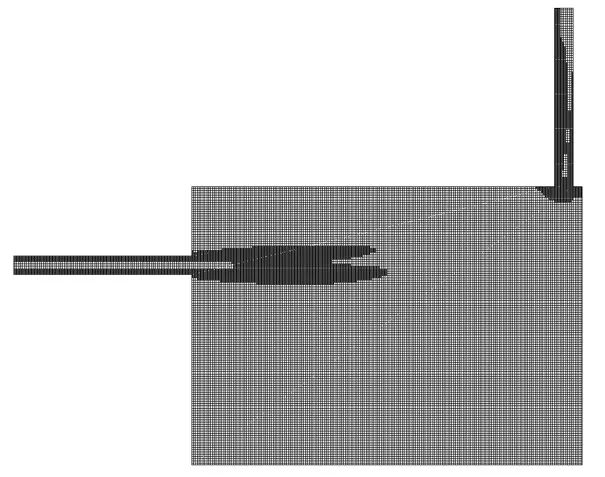
A fine mesh was applied over the full domain to provide a good resolution from floor to ceiling, where the results will be collected.
One cycle of adaptive meshing was also applied after about 4 travels during the analysis to provide an improved resolution over the higher velocity regions.
The resulting mesh is shown below and contains approx. 4.4 million cells. This is much finer than the numerical study used by Bartak et al. (24,300).
In total, the study was permitted to run for almost 10 travels. This was to allow for the slower converging parameters to settle (e.g. in the dead spots towards the corners of the room and regions closer to the floor and ceiling).
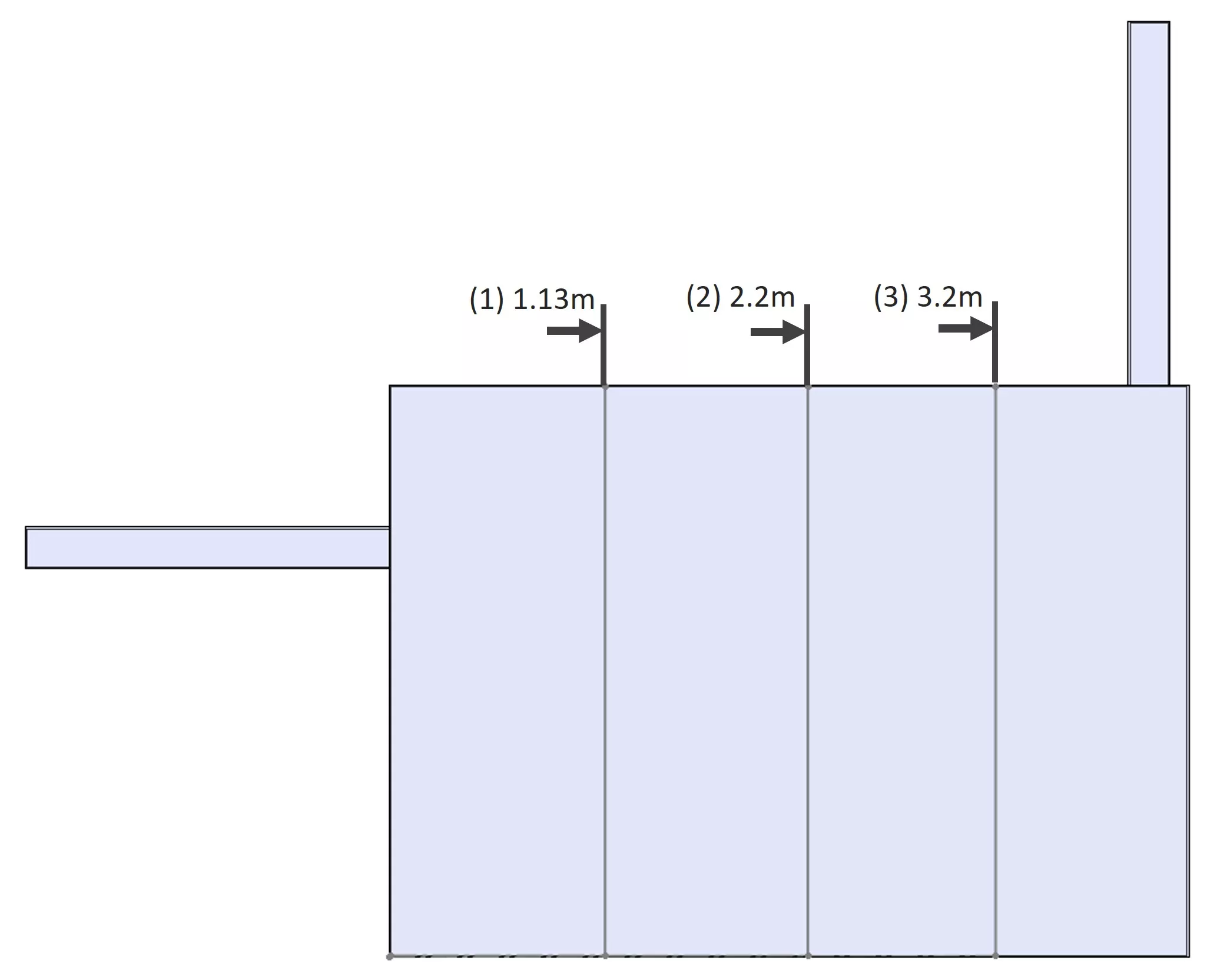
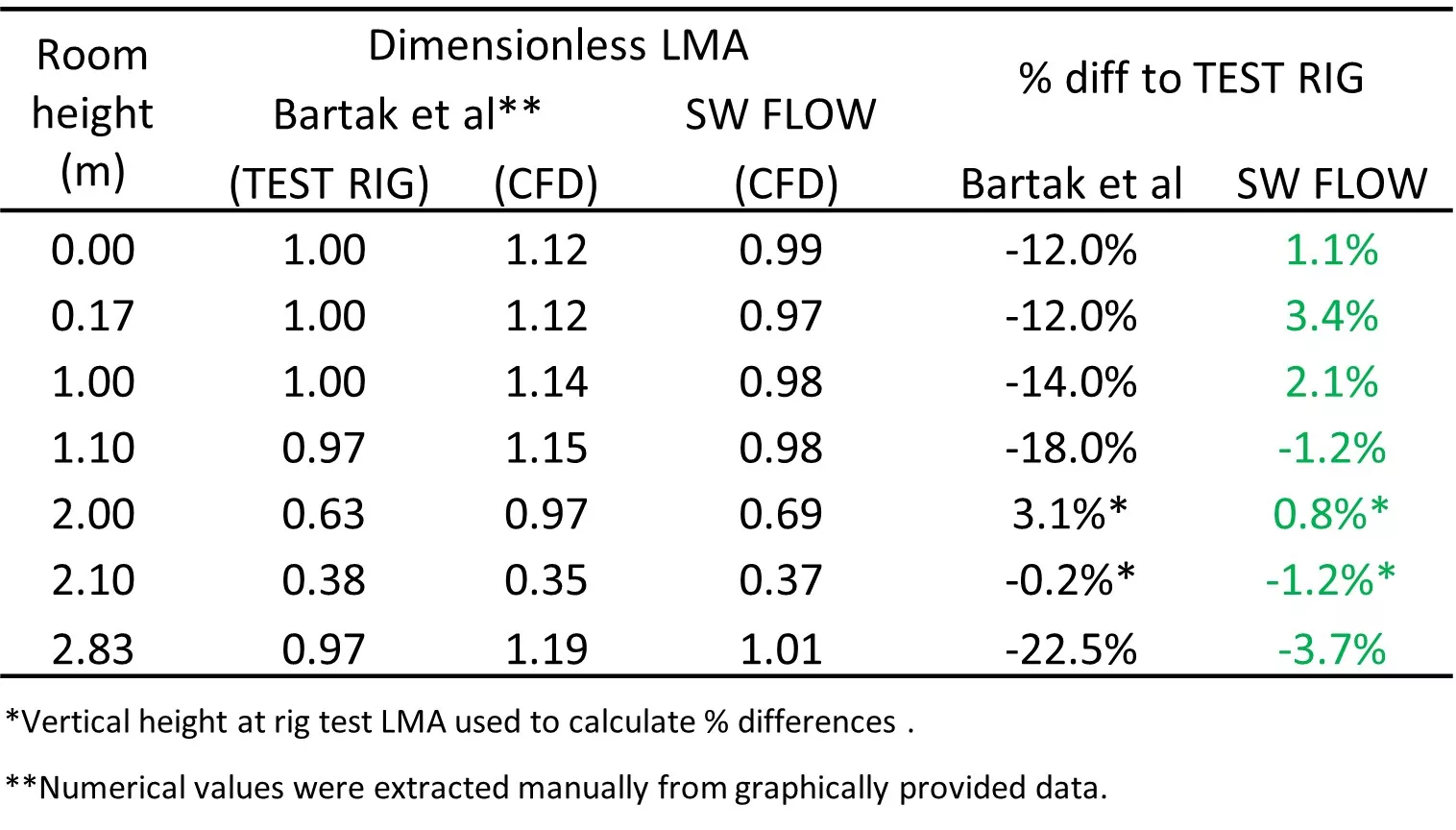
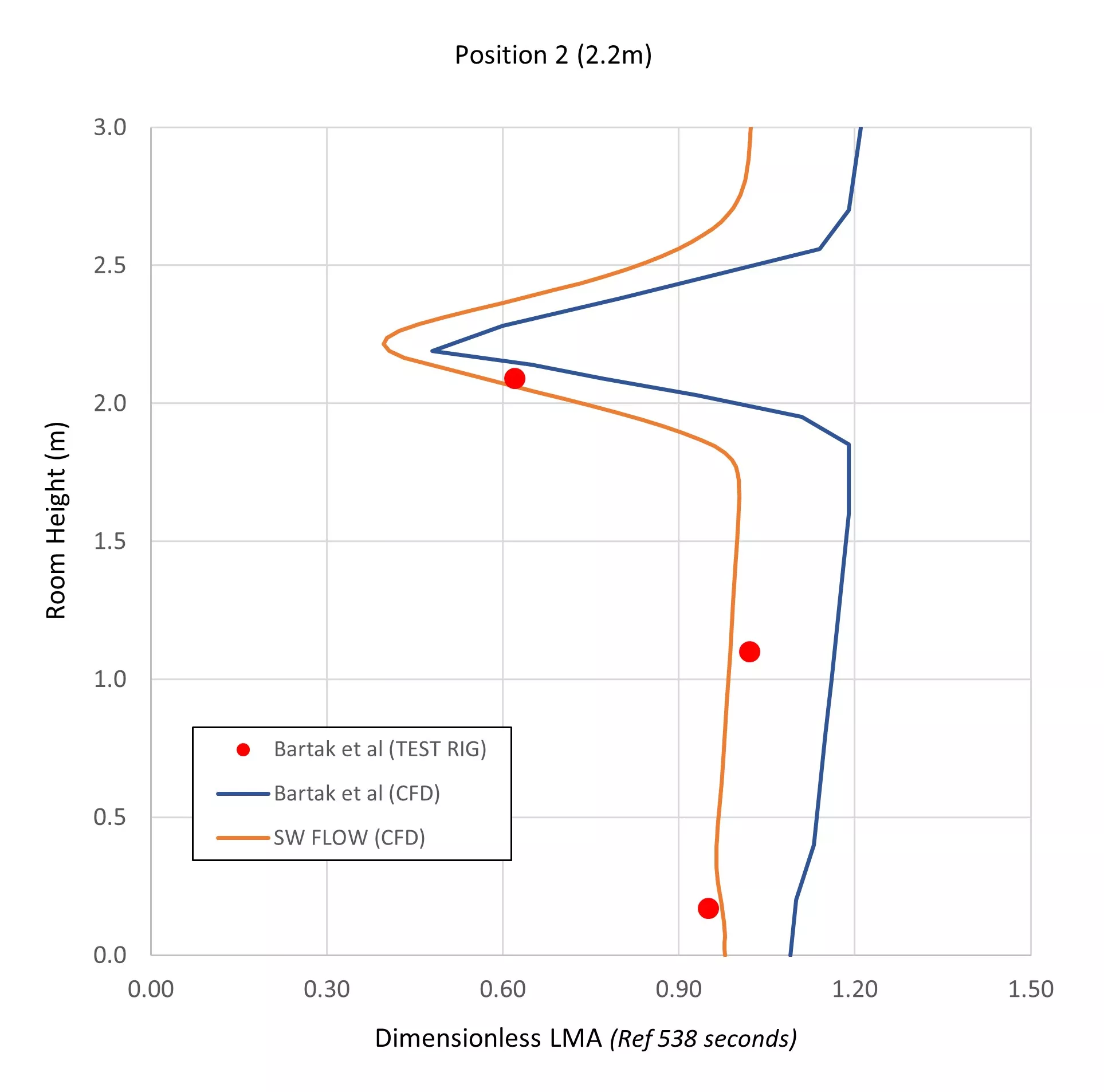
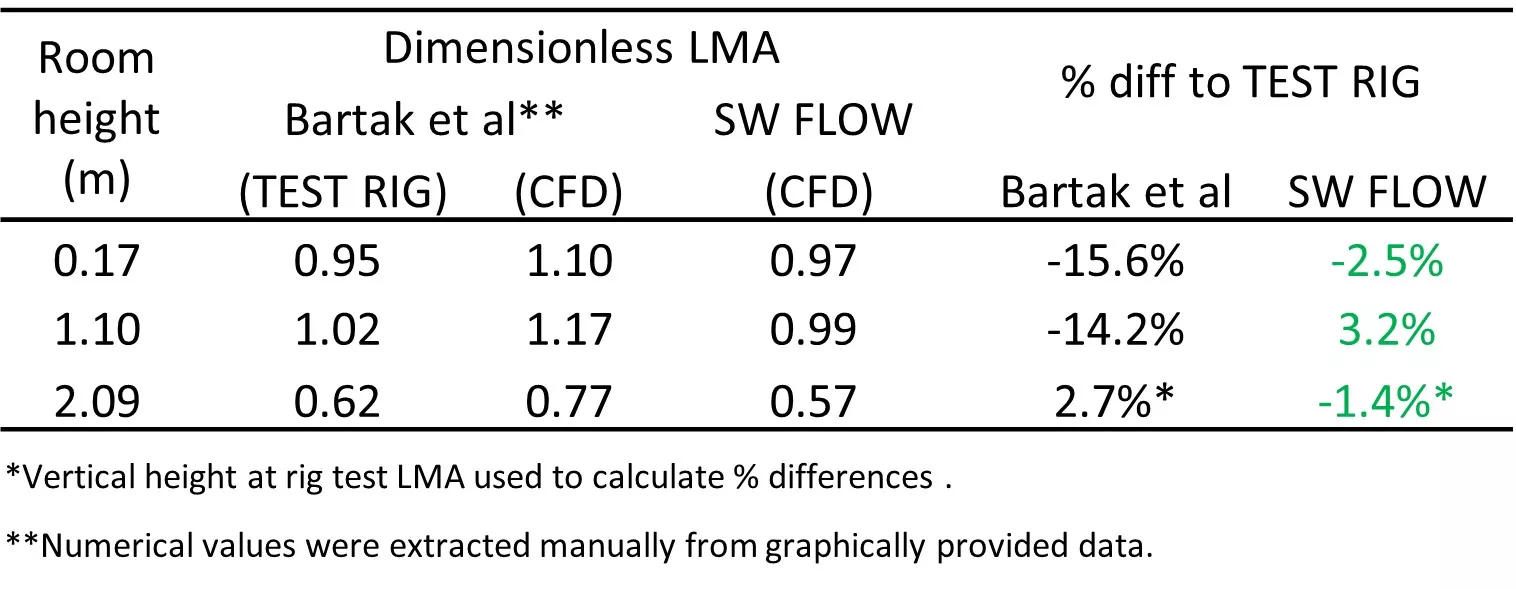
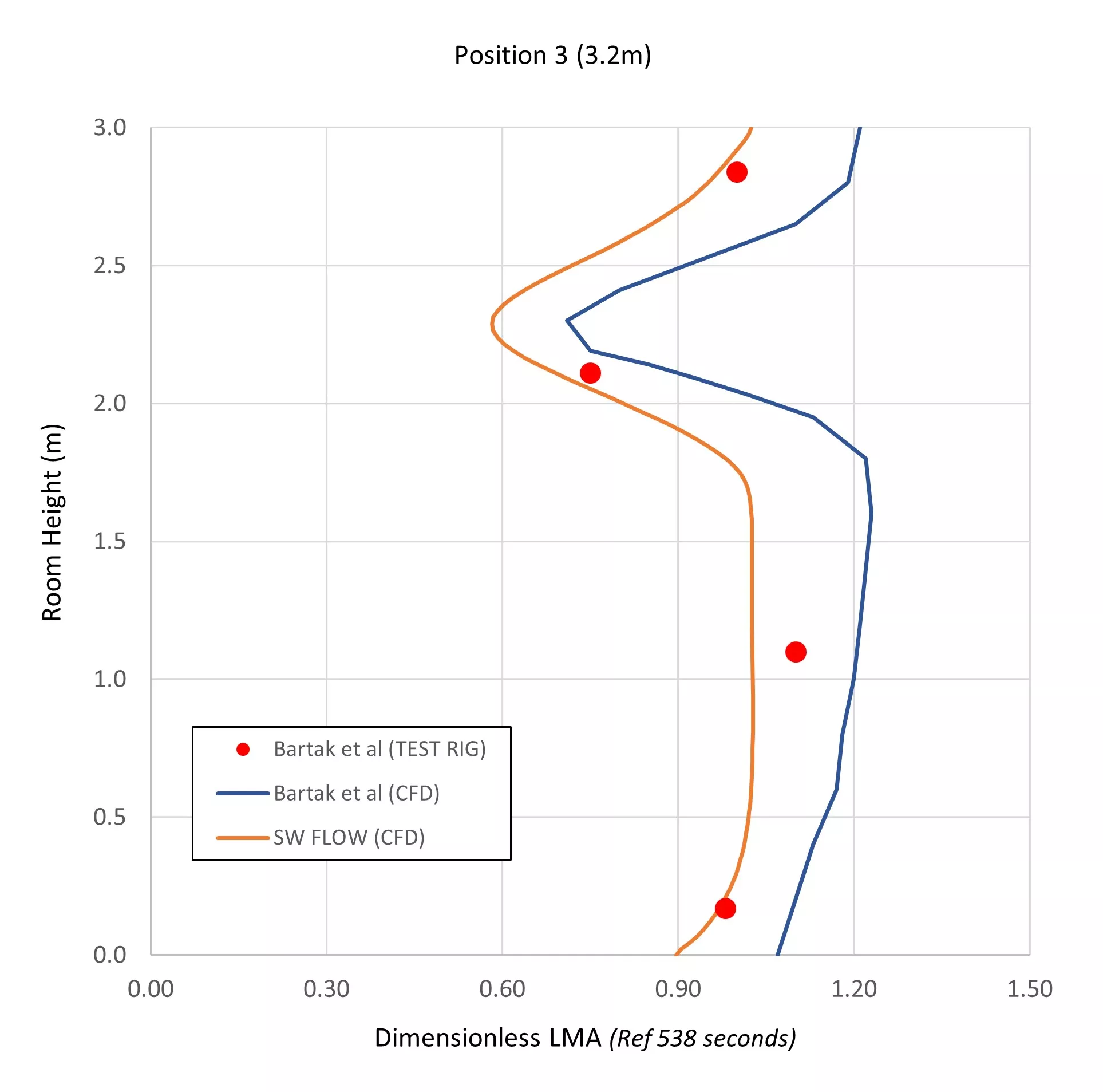
Results were taken along 3 vertical lines extending from floor to ceiling and running down the centre of the room and compared against the practical test by Bartak et al.
The Results
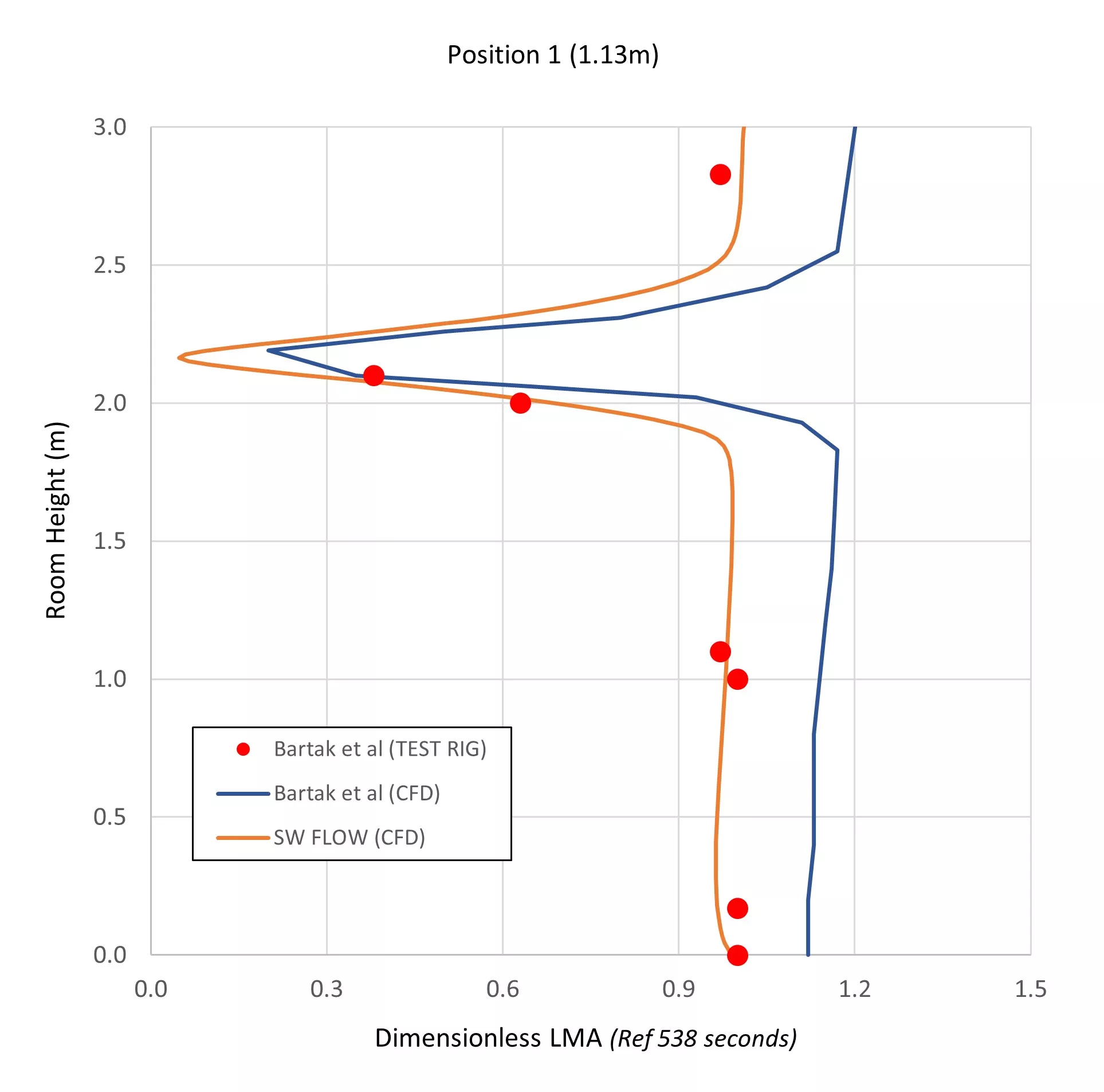
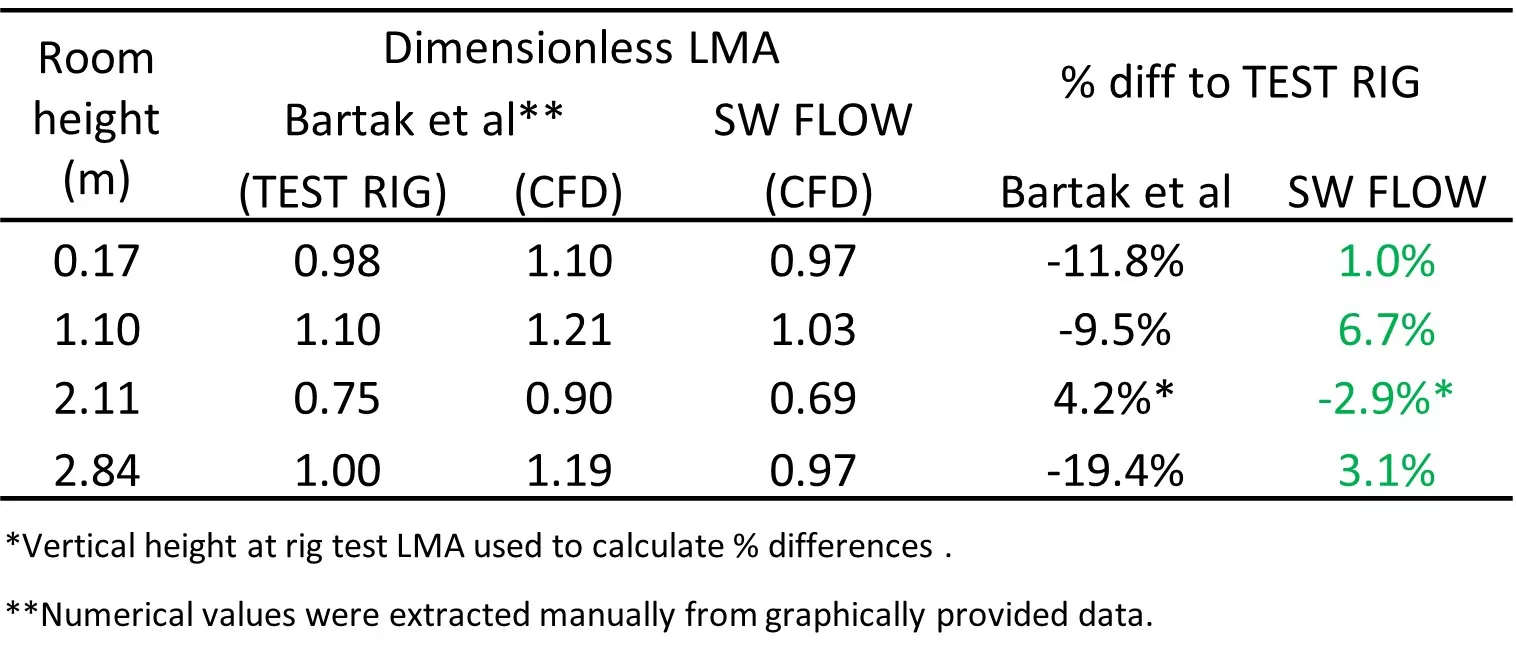
LMA results provided by Bartak et al. were divided through by 538 to provide a dimensionless LMA. This has been carried out here too for comparative purposes.
POSITION 1
POSITION 2
POSITION 3
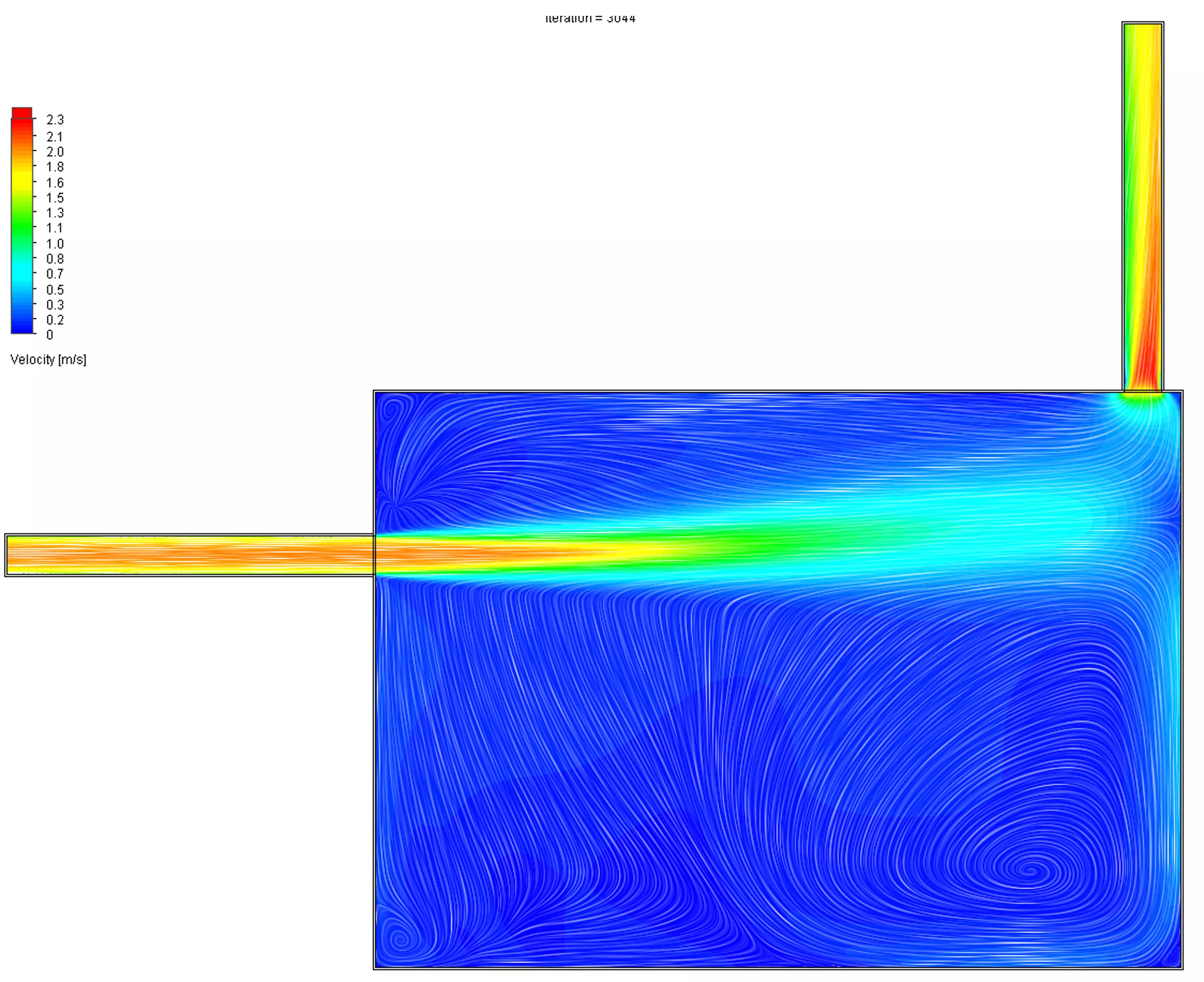
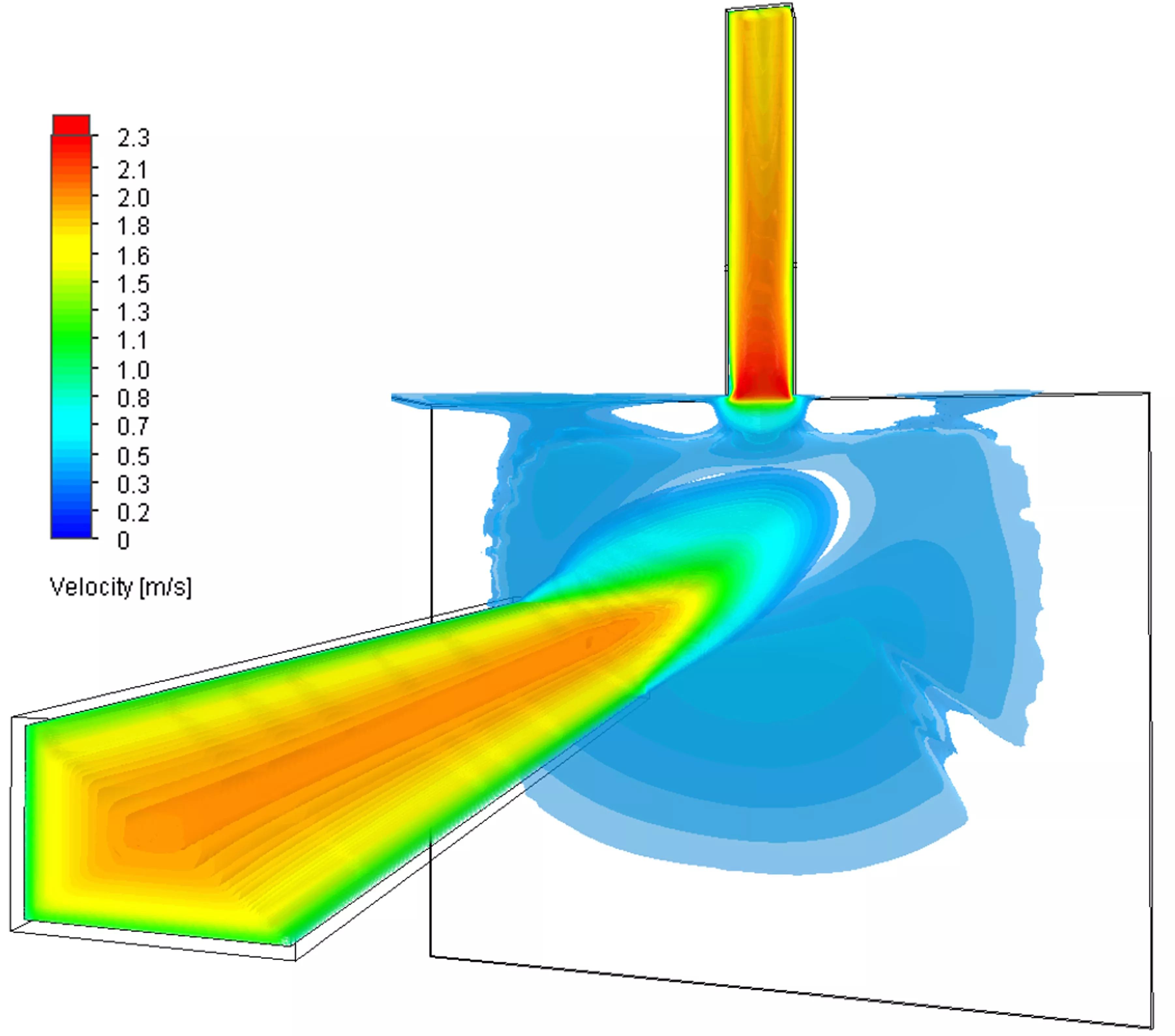
CUT PLOTS
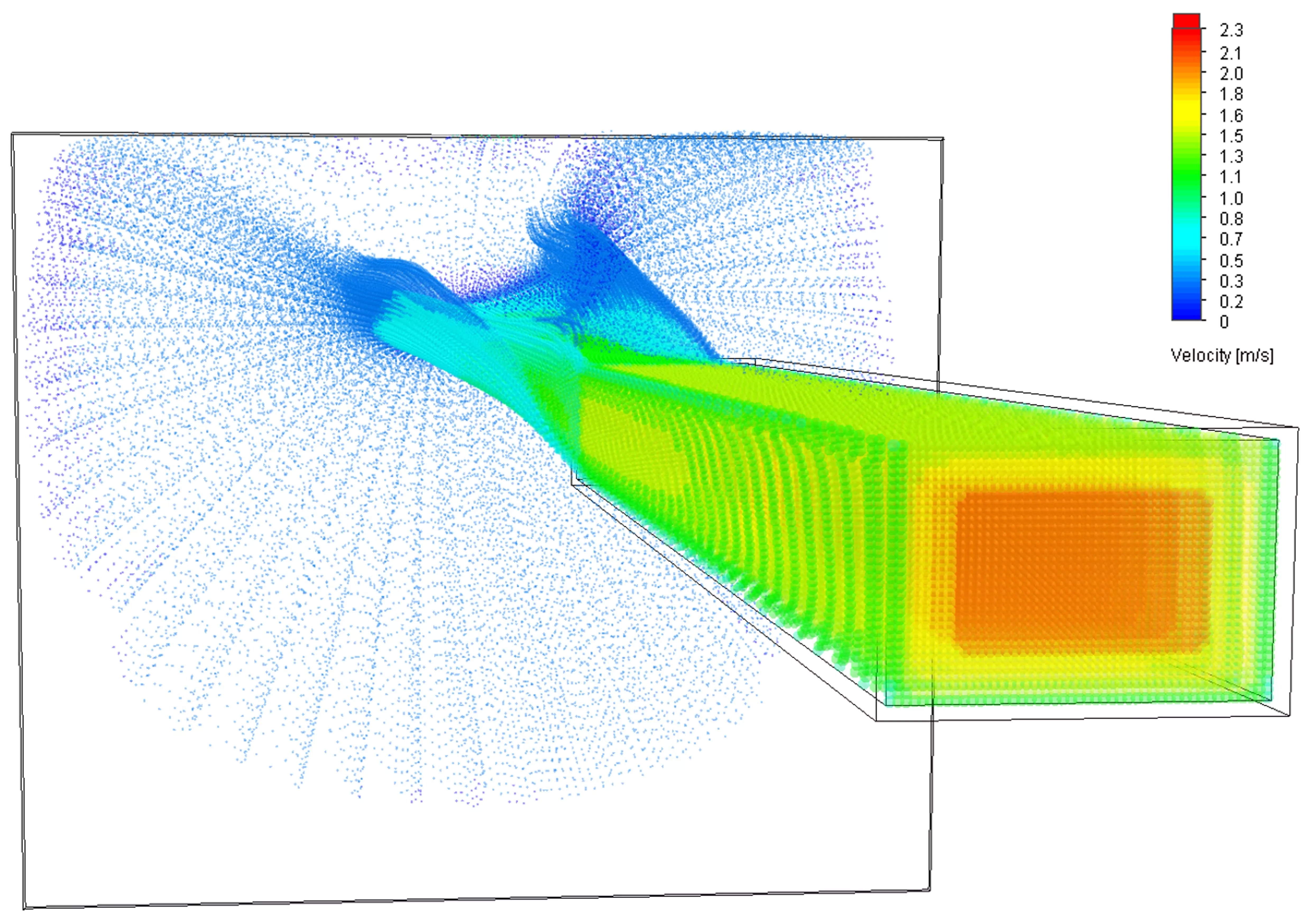
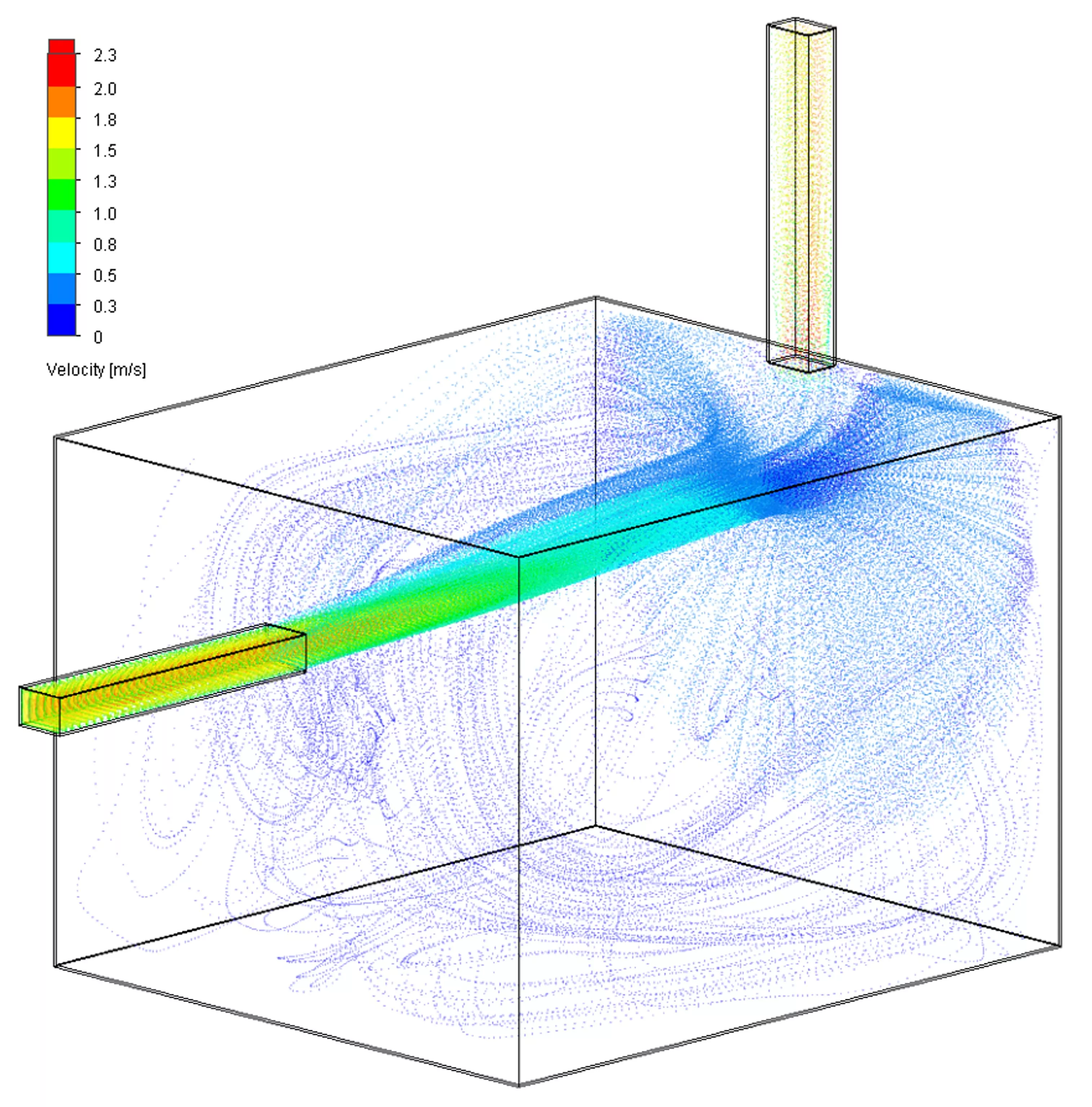
The results from the study in SOLIDWORKS Flow Simulation showed very good correlation when comparing the dimensionless LMA values against the test rig results. The largest difference was 6.7% which is very similar to the repeatability of the method used to collect the data from the test rig (6.5%).
This is a great result!
Generally, this type of validation gives good confidence that virtual testing can be used as a reliable tool to show how parts will perform in the real world.
Adding the power of SOLIDWORKS Flow Simulation to your design portfolio means having the ability to try out many “what if” scenarios that would simply take too long, or be too costly, by other methods.
To find out more, visit our SOLIDWORKS Flow Simulation page.
If you need help with SOLIDWORKS Simulation, our team can help you achieve accurate results and sharpen your skills.
Here’s a quick rundown of how we can help you get the best from SOLIDWORKS Simulation and virtual testing with our Simulation services.
Not only do we offer CPD-accredited training courses, but also finger-tip access to an expert Technical Support team and consultants who will tailor to your needs.
Categorised as: Simulation
Get a SOLIDWORKS Quote
Interested in SOLIDWORKS? Contact us for questions, trials, or demos by clicking the button below or call 01926 333777. Our experts will help you find the perfect solution.

Related Posts
How to Find Reaction Forces in SOLIDWORKS Simulation
SOLIDWORKS helps us to find resultant forces through simulation studies. These virtual tests reduce the need for physical prototypes and give us an accurate answer.

SOLIDWORKS Tips: Are you Making this Common Mistake in Fatigue Analysis?
Simulation is a vital and complex engineering need. Fortunately, SOLIDWORKS makes it easy to test, correct mistakes and obtain accurate results.
Redesigning Santa’s Sleigh in SOLIDWORKS
Every year Father Christmas has to fly in his sleigh to deliver presents to boys and girls all over the world in just one night. To put this into perspective, it takes a little under 24 hours to fly from London (UK) to Sydney (Australia) in a streamlined Boeing 747, whereas Father Christmas’ mode of transport is believed to be a rather non-aerodynamic sleigh.

Radiation in Flow Simulation – Part 1 : Reflection
Technical Manager Andy Fulcher explores ‘Radiation in Flow Simulation, Part 1 : Reflection’
Radiation in Flow Simulation – Part 2 : Refraction
Technical Manager Andy Fulcher explores ‘Radiation in Flow Simulation, Part 2 : Refraction’
The Coanda Effect in Flow Simulation
Can you take advantage of the Coanda Effect & can SOLIDWORKS Flow simulate it? Applications Engineer Romel Cumare investigates in his latest blog post.
So how accurate is SOLIDWORKS Simulation?
How accurate is SOLIDWORKS Simulation? Elite Applications Engineer Chris Boyles investigates.
Set Your Fluids Free with SOLIDWORKS Flow Simulation
A look at the new Free Surface feature coming in SOLIDWORKS Flow Simulation 2018.
Finding a Good Mesh Fast in SOLIDWORKS Flow Simulation
‘How do I know when to stop my calculation?’ and ‘How do I know my mesh is good enough?’ are questions often asked when running SOLIDWORKS Flow Simulation studies.
The answer is to ensure the solution reached is both fully converged AND mesh independent. In practice this can take a bit of trial and error as well as some experience in the process. However, SOLIDWORKS Flow can help us do both of these at once! Here’s how…

Free Surface Evaluation & Validation – SOLIDWORKS Flow Simulation
In 2018 SOLIDWORKS introduced a new capability to their Flow software. This is called ‘Free Surface’ and opens up many more applications for users who need to simulate fluid behaviour where a gas and a liquid (or two immiscible liquids) share the same region of space without an intervening solid